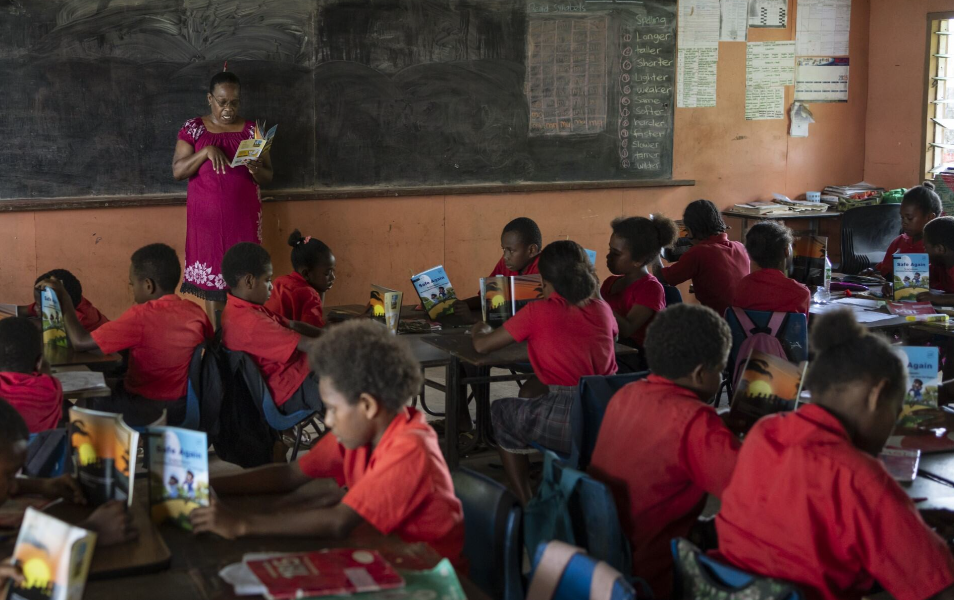
Climate change is already closing schools, disrupting learning, and placing the education of millions of children at risk every year. Climate change impacts destroy and damage education infrastructure and threaten the safety, health, and well-being of students and teachers, while extreme heat affects concentration and learning outcomes, leaving the most fragile education systems disproportionately at risk. In 2024 alone, 242 million students from pre-primary to upper secondary had their education disrupted due to climate change.
At the same time, education equips children, youth, teachers, and communities with the skills, knowledge, and understanding they need to adapt to a changing climate. The education sector plays a crucial role in developing the human capital needed to build a country’s resilience and is key to building public awareness and engagement on climate change adaptation.
To build a climate-resilient education system, adaptation must be at the centre of decision making. This requires coordination, collaboration, and action among education and climate change actors—all core aspects of the national adaptation plan (NAP) process.
Developed in partnership with Save the Children and the NAP Global Network, a new report for NAP teams and a companion guidance note for education ministries bring together emerging best practices and evidence to provide practical guidance for integrating the education sector into the NAP process.
In this article, we unpack some of the key concepts in the report and guidance note and explore how these resources can be used by NAP teams and education ministries to support climate-resilient education systems.
On Wednesday, July 29, join Save the Children and the NAP Global Network for a webinar showcasing two new resources for NAP teams and education ministries. Register here!
What Is the Education Sector?
The education sector is made up of multiple levels, actors, and components, all of which work together to facilitate learning:
- Multiple levels include formal education from early childhood, primary, and secondary school to higher education and technical and vocational education and training (TVET), as well as non-formal education for children, youth, and adults.
- Multiple actors include national education ministries, sub-national education authorities, schools, universities and TVET centres, their associated leadership and committees, civil society organizations, teachers and educators, parents, caregivers, and students.
- Multiple components include curriculum and pedagogy, teacher quality and training, education infrastructure, school safety for students and teachers, and educational continuity management.
Children are often a key target group for the sector, and as such, the report and guidance note take a child-focused lens on the education sector’s adaptation needs.
What Does a Climate-Resilient Education System Look Like?
The report and guidance note focus on three components of a climate-resilient education system:
- Resilient education infrastructure: Classrooms, schools, and other education infrastructure built, retrofitted, and/or maintained to withstand current and future climate hazards. Resilient education infrastructure is gender and disability responsive, ensuring equitable access for all.
- School safety and educational continuity management: The health, safety, access, and well-being of students, teachers, and other education staff is protected in the face of climate hazards. Through effective gender- and disability-responsive planning, disruptions to learning due to climate change are minimized for all.
- Teaching and learning: Climate change curricula are integrated across subjects and grade levels, as well as non-formal education and extracurricular opportunities. Teachers are trained and supported to deliver updated curricula.
To start effectively integrating the education sector into each phase of the NAP process, we have outlined key actions and approaches in this interactive list for NAP teams.
Our guidance note explores some of the benefits of the education sector engaging in the NAP process. The NAP process can help
-
-
- set out a national commitment to adaptation in the education sector,
- ensure comprehensive adaptation approaches and investments in education,
- coordinate approaches to adaptation across sectors,
- increase access to climate finance, and
-
- track progress and learning about what works in education sector adaptation.
Education ministries can find official information on the NAP process to help inform their engagement. This practical list shows you where to learn more about the NAP process:
Launch at NAP Expo 2026
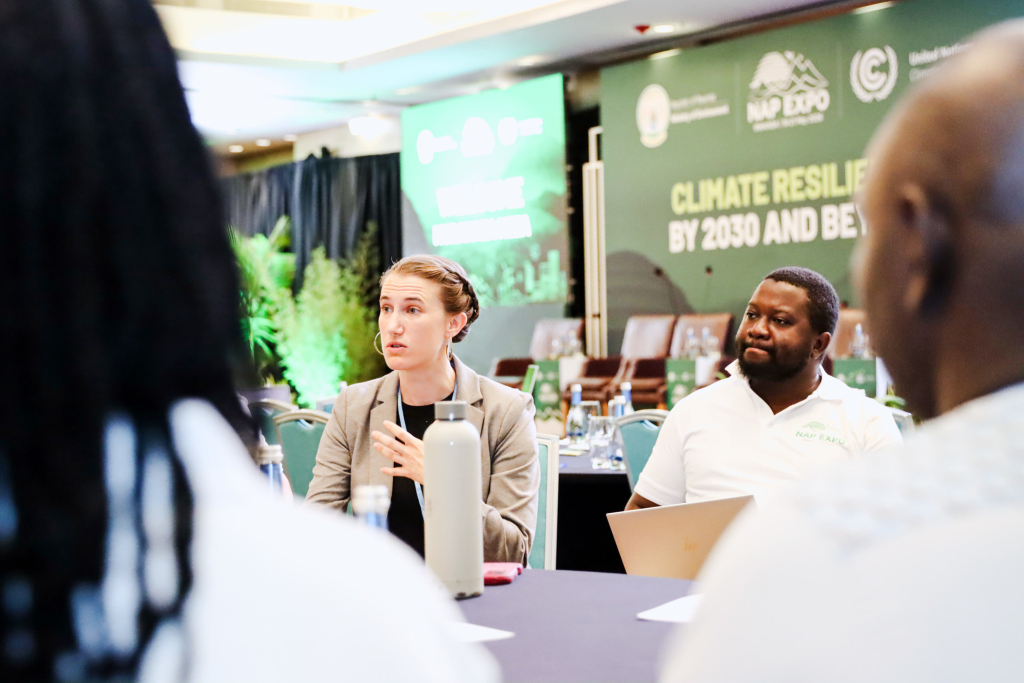
On the sidelines of NAP Expo 2026, country representatives and partners met in Kigali, Rwanda, for a dialogue on practical experiences and opportunities to build a climate-resilient education sector through coordination, collaboration, and action among education and climate change actors.
Some key priorities emerged from the discussion: the importance of coordination between NAP lead ministries and education ministries throughout the NAP process, the critical role that the education ministry and other education sectors play in supporting NAP lead ministries to prioritize education, and the recognition that education needs to move from a cross-cutting consideration to a more effectively prioritized sector in national adaptation planning.
As part of this event led by Save the Children and NAP Global Network, participants also explored the report for NAP teams.
Related Resources