Analysis and commentary on the Network’s experiences coordinating climate-resilient development.
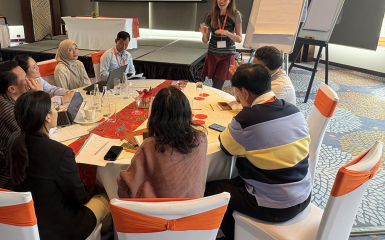
What Four Asia–Pacific Countries Are Learning About Reporting on Climate Change Adaptation
By Sonam Gyelpo (Bhutan), Paul Ezekiel M. Losaria (The Philippines), Teerapat Kamnuantip (Thailand), and Sandab Khim (Cambodia), Patrick Guerdat (NAP GN)
The end of 2026 marks a critical opportunity for countries under the Paris Agreement to report on their progress in addressing the impacts of climate change and share information on their commitments to adaptation actions. Reporting and transparency sit at the heart of global sustainable development frameworks. They build trust between countries, track progress, and give governments the evidence they […]
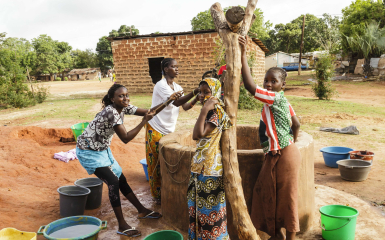
Le Sénégal mise sur les solutions locales pour renforcer son adaptation aux changements climatiques
Aurélie CEINOS, Conseillère Égalité des Genres et Inclusion Sociale, Réseau mondial de PNA; Ndeye Dieynaba SOW, Experte en Adaptation, Ministère de l'Environnement et de la Transition écologique du Sénégal ; Dibor Sarr FAYE, Chef de la Division Adaptation et Pertes et Dommages et Point Focal National Genre et Changement Climatiques, Ministère de l'Environnement et de la Transition écologique du Sénégal.
À Diaoulé, une commune rurale du Sénégal, des femmes cultivent légumes et arbres fruitiers sur une ferme agroécologique qu’elles gèrent elles-mêmes. En stabilisant leurs revenus et en diversifiant leurs activités économiques, elles sont mieux à même de faire face aux aléas climatiques qui s’intensifient. À Keur Massar, en périphérie de Dakar, des quartiers qui étaient […]
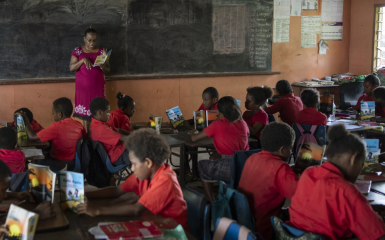
Why the Education Sector Matters in the National Adaptation Plan Process: New resources for NAP teams and education ministries
Climate change is already closing schools, disrupting learning, and placing the education of millions of children at risk every year. Climate change impacts destroy and damage education infrastructure and threaten the safety, health, and well-being of students and teachers, while extreme heat affects concentration and learning outcomes, leaving the most fragile education systems disproportionately at risk. In 2024 alone, 242 million students from pre-primary to upper secondary had their […]
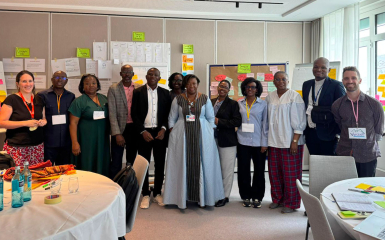
Five African Countries Set to Step Up Gender-Responsive National Adaptation Planning
On the sidelines of the 2026 UN Bonn Climate Change Conference, five African countries met in June for a training of trainers (ToT) session on integrating gender equality and social inclusion (GESI) in national adaptation plan (NAP) processes. Organized by the NAP Global Network, this in-person workshop brought together 10 government representatives from five countries—Benin, […]

Climate Change Adaptation and Peacebuilding Keep Missing Each Other
In fragile and conflict-affected contexts, climate change and conflict reinforce one another. They do so not in simple or automatic ways, but by interacting with existing political, social, and economic vulnerabilities. Climate impacts affect livelihoods, resource access, and governance systems. Conflict and weak institutions undermine the effectiveness of climate change adaptation. Addressing this dual burden […]
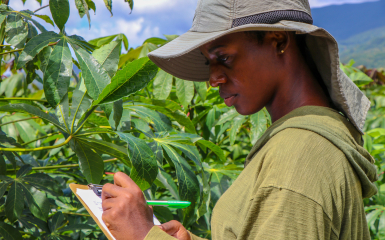
From Country Priorities to Global Signals: A step-by-step guide to adaptation indicators for national monitoring, evaluation, and learning systems
By Emilie Beauchamp and Krystel Montpetit
Countries left the Bonn Climate Change Conference last week without an agreement on issues related to the global goal on adaptation. This stalemate was partly due to disagreement among countries over the next steps and the composition of a task force to improve the Belém Adaptation Indicators (BAIs), the 59 voluntary indicators adopted at the […]
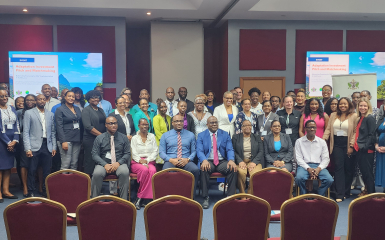
Saint Lucia Government Makes Matches for National Adaptation Plan Implementation
On May 27 and 28, Saint Lucia’s Department of Sustainable Development (DSD) hosted a series of practical conversations on how to fund and implement Saint Lucia’s national priorities for adapting to climate change, guided by its 2018 National Adaptation Plan (NAP). The 2-day Adaptation Investment Pitch and Matchmaking Event brought together representatives from three priority […]
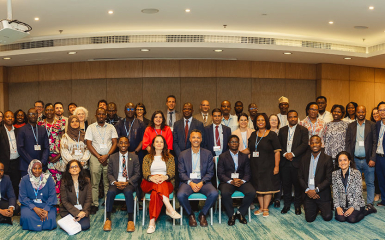
Matchmaking Symposium at NAP Expo Brings Countries and Funders Together to Unlock Adaptation Finance
At this year’s NAP Expo in Kigali, the Adaptation Investment Matchmaking Symposium returned at a larger scale, bringing together governments, climate funds and development partners to help accelerate investment in climate resilience.
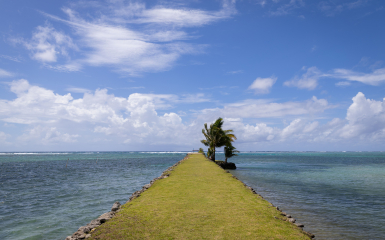
Between the Tides: Climate change adaptation in Palau
Palau is a small island nation of extraordinary ecological and cultural richness, spread across more than 300 islands in the western Pacific. It is also among the most climate-vulnerable countries on Earth. Recognizing this, the Government of Palau is developing the country’s first stand-alone national adaptation plan, anticipated for adoption in 2026.
La República Dominicana Fortalece la Colaboración en el Proceso de Actualización del Plan Nacional de Adaptación
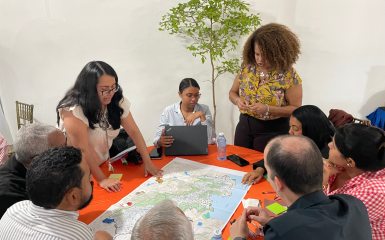
La República Dominicana organizó en febrero pasado una serie de consultas entre actores clave del gobierno y la comunidad, para fortalecer el proceso de actualización del plan nacional de adaptación al cambio climático. En los tres talleres regionales del 2 al 6 de febrero pasado, el gobierno de la República Dominicana reunió a representantes de […]

Appel à manifestation d’intérêt: Formation sur l’intégration de l’égalité de genre et de l’inclusion sociale dans les processus de PNA
Le Réseau mondial de plans nationaux d'adaptation (NAP GN) a lancé un appel à candidature aux pays francophones intéressés pour manifester leur intérêt pour l'organisation d'un atelier de formation sur l'intégration de l'égalité de genre et de l'inclusion sociale (EGIS) dans les processus de PNAen 2026.
Le NAP GN est en mesure d’aider trois pays francophones à organiser un atelier de formation de deux à trois jours à l’intention des acteurs gouvernementaux concernés par l’intégration de l’EGIS dans les processus de PNA. Le NAP GN utilisera une approche de formation de formateurs (TOT) et aidera deux personnes de chaque pays à […]
Key Pillars Guiding Malaysia’s National Adaptation Plan Process: What can we learn?
By Jasmin Irisha Jim Ilham, Senior Climate Change Adaptation Coordinator for Malaysia
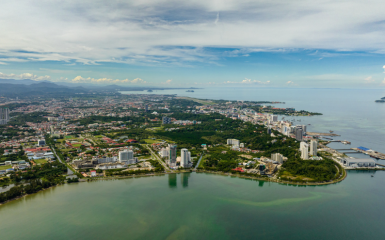
Malaysia is developing its first inclusive national adaptation plan (MyNAP), which is built upon four strategic pillars. It also sets out key principles for advancing the country’s NAP process. This article outlines how Malaysia is working to mark a major milestone in its NAP process around key pillars and principles—from strengthening governance and data systems to unlocking private investment and scaling adaptation finance.