Insights
Explore the latest explainers, expert analysis, and story highlights from the NAP Global Network on advancing national adaptation planning and climate action around the world.
Climate Change Adaptation and Peacebuilding Keep Missing Each Other
Alignment between peace and climate adaptation efforts can strengthen resilience, legitimacy, and long-term stability, often more effectively and at lower cost than treating the two agendas in isolation.
Why the Education Sector Matters in the National Adaptation Plan Process: New resources for NAP teams and education ministries
We explore how NAP teams and education ministries can work together to support climate-resilient education systems.
What Four Asia–Pacific Countries Are Learning About Reporting on Climate Change Adaptation
Government representatives from the Philippines, Thailand, Cambodia, and Bhutan shared insights for strengthening the next round of the Biennial Transparency Report.
Between the Tides: Climate change adaptation in Palau
This article explores how the country is working to adapt to the impacts through its NAP process, building on community knowledge, nature-based solutions, and local leadership.

Enhanced NDCs Are Making Strong Links to National Adaptation Plans
Anika Terton and Christian Ledwell, IISD, in collaboration with IKI Support Project for the Implementation of the Paris Agreement (SPA)/GIZ
Many countries have initiated and are advancing their NAP processes to identify and address their priorities for adapting to climate change.

Resilience in Action: What we learned from our first 5 years supporting adaptation governance
Anne Hammill, Senior Director, Resilience Program, International Institute for Sustainable Development (IISD)
Progress takes many forms. How can we transform adaptation planning and decision-making systems to reduce harm and loss in the face of climate change? Here’s what we’ve learned so far.

Why Learning Is Essential for Climate Adaptation Monitoring and Evaluation
Patrick Pringle, Pandanus Climate Consulting/Senior Research Associate, Climate Analytics
As recognition of learning within monitoring and evaluation for climate adaptation grows, this guest blog explores how to move from rhetoric to practical action.
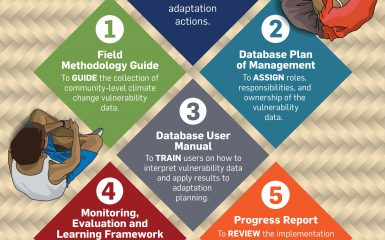
Five New Tools for Coordinating Climate Change Adaptation in Kiribati
Julie Dekens and David Hoffmann, the International Institute for Sustainable Development.
The Government of Kiribati recognizes the risks that climate change poses to the livelihoods of its people. Accordingly, it is putting in place measures to ensure the activities they depend on can withstand more intense and frequent climate hazards. Our team at the NAP Global Network recently helped Kiribati publish several important documents that work […]

Jamaica’s Road to Climate Resilience: Paving the way forward with lessons learned
Daniel Morchain, IISD, and Katherine Blackman and Le-Anne Roper, Climate Change Branch, Ministry of Economic Growth and Job Creation, Government of Jamaica
For decades, Jamaicans have recognized the need to adapt to the impacts of climate change—and acted on it. With several dozen adaptation projects completed or in their implementation stage and an institutional structure set up to ensure coherence and collaboration between government and non-government actors, Jamaica can boast of its track record.

Engaging the Private Sector in Vietnam’s National Adaptation Plan (NAP) Process
By Huy Nguyen, Climate Change Specialist, Vietnam
Conducting interviews with private enterprises to identify the barriers in private sector participation in the NAP process.
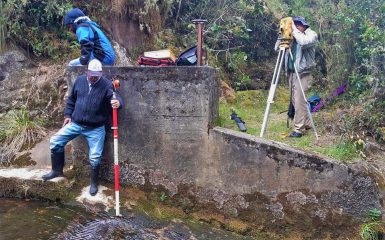
Reliable Water Supply in an Unpredictable Climate
Interview with Daniel Morchain, IISD
An interview with Policy Advisor Daniel Morchain, IISD, on his work in preparing the installation of an early warning system that will help climate-proof Colombia’s water supply system.

Five Steps to Ensure Your Private Sector Engagement Is Gender Responsive
By Clare Church
As governments engage the private sector in their NAP process, they should take these necessary steps to ensure their efforts are gender responsive.