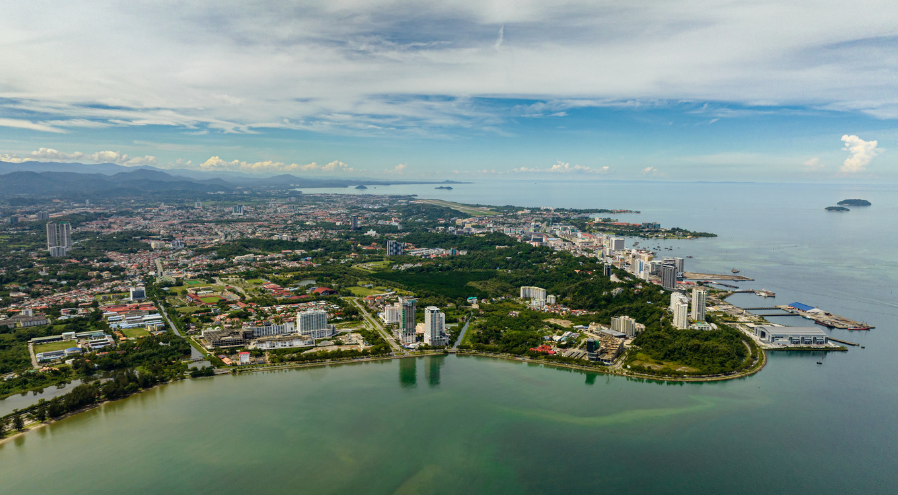
Floods and storm surges have far-reaching effects on on Malaysia’s economy and environment, causing annual economic losses of over USD 1.3 billion and impacting approximately 10.1% of land area. Climate events disproportionally affect marginalized groups, such as women, children, youth, people with disabilities, rural communities, low-income urban communities, and Indigenous populations.
Research by the Intergovernmental Panel on Climate Change points the increasing frequency of extreme weather events by the mid-21st century, including more intense rainfall in Southeast Asia. To prepare for these current and future climate scenarios, countries in the region need to ramp up efforts to build the resilience of their communities and economies to climate shifts and shocks.
Recognizing the urgency of strengthening Malaysia’s national response to its unique climate change vulnerabilities and risks so that no one is left behind, the country is developing its first inclusive Malaysia National Adaptation Plan (MyNAP). The MyNAP is built upon four strategic pillars, aiming to enhance Malaysia’s institutional, technical, and financial capacities for developing, implementing, and monitoring its approaches. It also sets out key principles for advancing the country’s NAP process.
This article outlines how Malaysia is working to mark a major milestone in its NAP process around key pillars and principles—from strengthening governance and data systems to unlocking private investment and scaling adaptation finance.
Initiating the NAP Process
Under the leadership of the Ministry of Natural Resources and Environmental Sustainability, five climate-sensitive sectors—water and coastal resources, agriculture and food security, infrastructure and cities (including energy), forestry and biodiversity, and public health—have been identified as priorities for the MyNAP. These sectors require targeted adaptation measures to effectively address vulnerabilities.
The MyNAP, anticipated to take effect by the end of 2026, will offer a coherent national framework on adaptation planning and action to enable long-term transformational shifts that build climate resilience into national and sectoral development planning. It also aligns closely with Malaysia’s overarching development strategies, including the Thirteenth Malaysia Plan (2026–2030), emphasizing the critical importance of adaptation and promoting resilience against climate change through risk-informed development planning.
What Makes a Successful NAP?
Moreover, Malaysia has developed a MyNAP Framework, which sets out a number of key principles for the country’s NAP process, including:
- the inclusion of cross-cutting themes, such as gender-responsive measures, climate finance and private sector investment;
- addressing intersectional vulnerabilities by recognizing that unique vulnerabilities are shaped by intersecting factors such as gender, age, socio-economic status, background and ethnicity;
- supporting women-led and youth-led initiatives and enterprises, alongside targeted capacity building, climate-resilient livelihoods and microfinance models in climate-sensitive sectors, such as agriculture, fisheries and coastal resources;
- implementing an integrated monitoring, evaluation and learning system to ensure the effectiveness of adaptation measures by tracking progress, evaluating outcomes, and fostering continuous learning and improvement; and
- engaging with private sector and civil society organizations for comprehensive and inclusive consultations to ensure that the process is evidence based and reflects the diverse needs and priorities of Malaysia’s stakeholders.
Four strategic thrusts are central to the successful development of the MyNAP:
- establishing governance for coordinated climate adaptation action,
- building data systems and monitoring for informed planning,
- enabling risk-based decisions and incentivizing private investments, and
- securing scalable and sustainable funding for adaptation.
The MyNAP is more than just a policy document and a fulfilled obligation to the UN Framework Convention on Climate Change (UNFCCC). It is key to developing strategies and incentives to foster private investment adaptation solutions, establish mechanisms to highlight adaptation priorities, and develop national systems for tracking adaptation finance flows.
According to Malaysia’s Fourth National Communication to the UNFCCC (NC4), a preliminary estimate of USD 63.6 million is required for various adaptation initiatives to strengthen resilience measures throughout the country. This is a fairly conservative figure compared to the median cost for NAP implementation derived from the NAP Global Network’s assessment of submitted NAPs—an estimated USD 2 billion.
It is clear that strong policy signals, enabling regulations, robust data systems, and shared information platforms that are supported by innovative financing mechanisms are needed. Multistakeholder collaboration among the public, private, and financial sectors is essential to unlock financing opportunities for adaptation-aligned investments. There is no more room for adaptation to take the back seat in Malaysia’s climate agenda.
While the country has undertaken significant efforts in adaptation—such as the Penang Nature-Based Climate Adaptation Programme and the development of a multi-hazard platform for forecasting local-level climate extremes and physical hazards for Iskandar Malaysia—notable challenges remain, including a lack of capacity resulting in coordination and governance challenges, limited private sector engagement, and inadequate adaptation financing.
In a country where disasters like floods are no longer seasonal and are increasingly erratic and unpredictable, adaptation must be centred on resilience, with preparedness embedded in federal, state, and local policies and planning to ensure that daily life, livelihoods, and sources of income remain safe and undisrupted.
This article is adapted from a longer piece by Jasmin Irisha Jim Ilham, originally published as “What’s Next on the Climate Adaptation Horizon for Malaysia” in Perspective + Outlook 2026 — Shifting Sands (special issue) (pp. 114–115), published by The Edge Malaysia.
Related content
- Malaysia’s Third Iteration of the Nationally Determined Contribution (2025)
- Malaysia’s Fourth National Communication Report (NC4) under the United Nations Framework Convention on Climate Change (2024)
- Toolkit for a Gender-Responsive Process to Formulate and Implement NAPs