
Between the Tides
Climate change adaptation in Palau


On the Frontlines of Climate Change
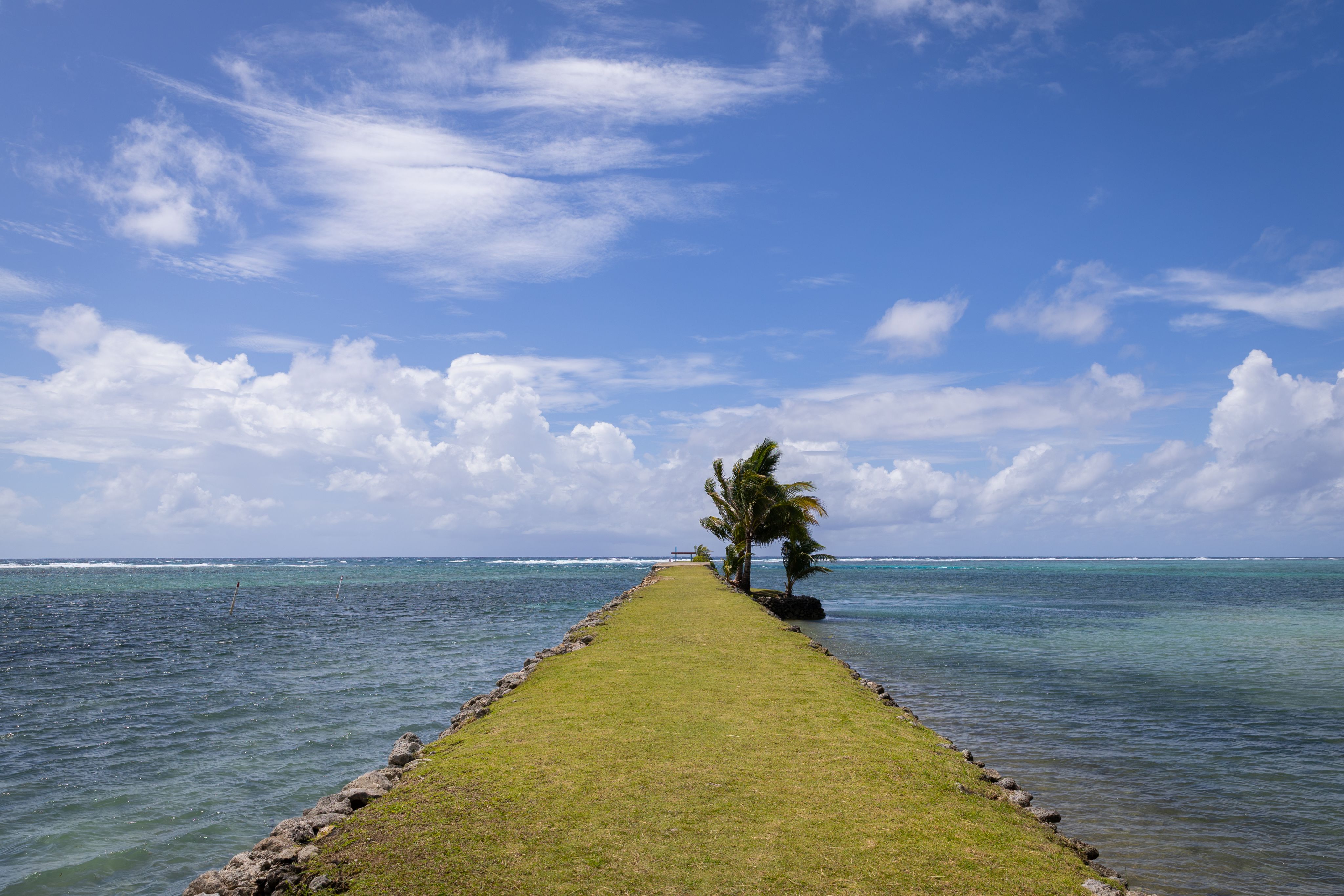
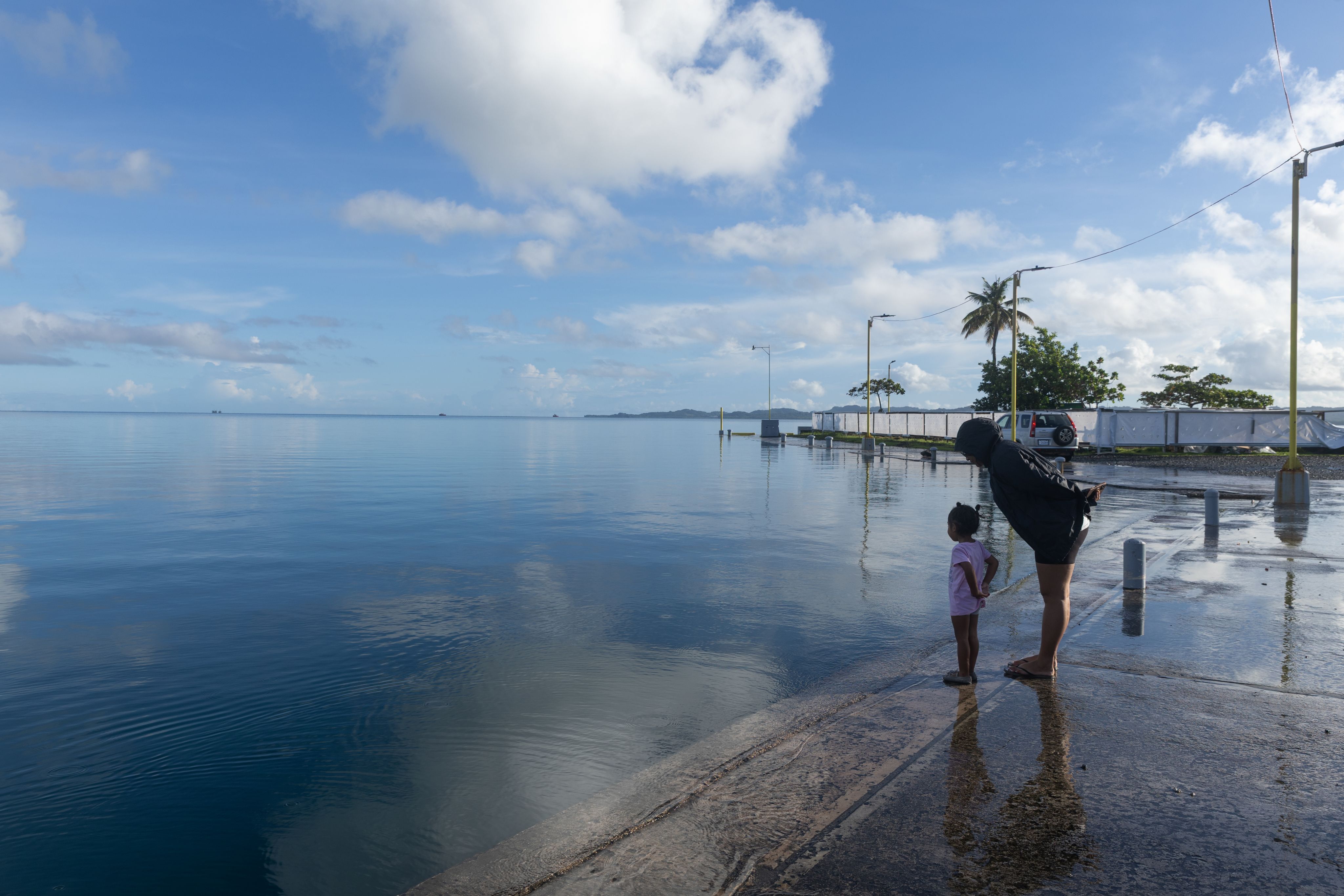
Palau is a small island nation of extraordinary ecological and cultural richness, spread across more than 300 islands in the western Pacific. It is also among the most climate-vulnerable countries on Earth. With the majority of its population, infrastructure, and cultural heritage concentrated in low-lying coastal areas, Palau faces mounting threats from sea level rise, intensifying storm surges, coastal erosion, and increasingly erratic weather patterns. These are not projected risks: they are present realities, already visible in eroded shorelines, compromised infrastructure, saltwater intrusion into freshwater and agricultural systems, and the physical degradation of sites that have anchored Palauan identity for centuries.
The evidence is immediately apparent along many of Palau's coastlines. Palm trees with exposed root systems cling to shorelines where soil and sand have steadily eroded away. Roads that run metres from the ocean are increasingly vulnerable to wave action and flooding. Inland, the effects compound: taro fields—culturally and nutritionally central to Palauan life—are experiencing saltwater intrusion as groundwater tables shift and storm events grow more severe.

Kiara Worth/IISD/Palau Office of Climate Change
Kiara Worth/IISD/Palau Office of Climate Change

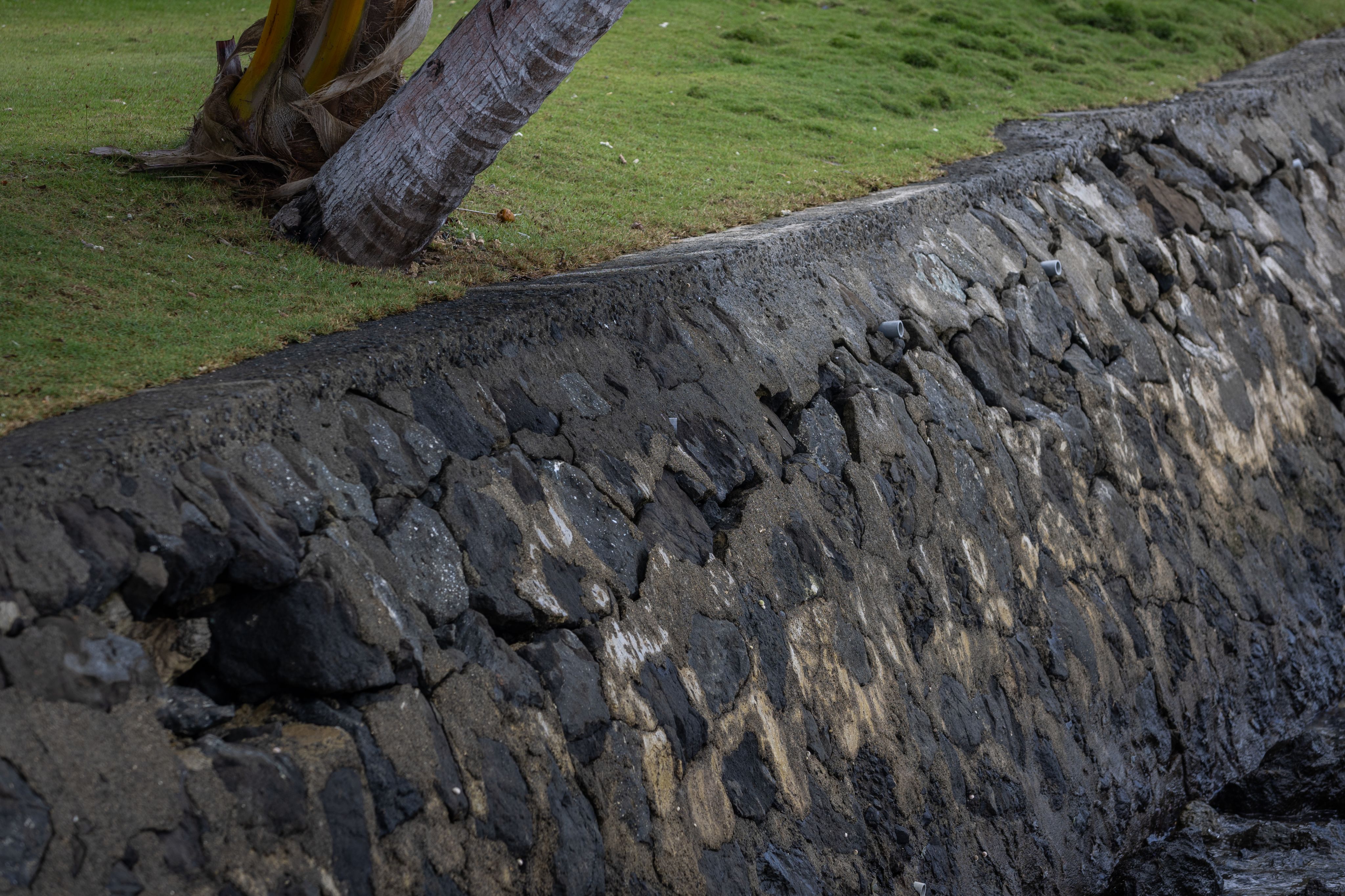
A growing crack in the sea wall at Melekeok is a clear sign of stress on coastal infrastructure. (Kiara Worth/IISD/Palau Office of Climate Change)
A growing crack in the sea wall at Melekeok is a clear sign of stress on coastal infrastructure. (Kiara Worth/IISD/Palau Office of Climate Change)
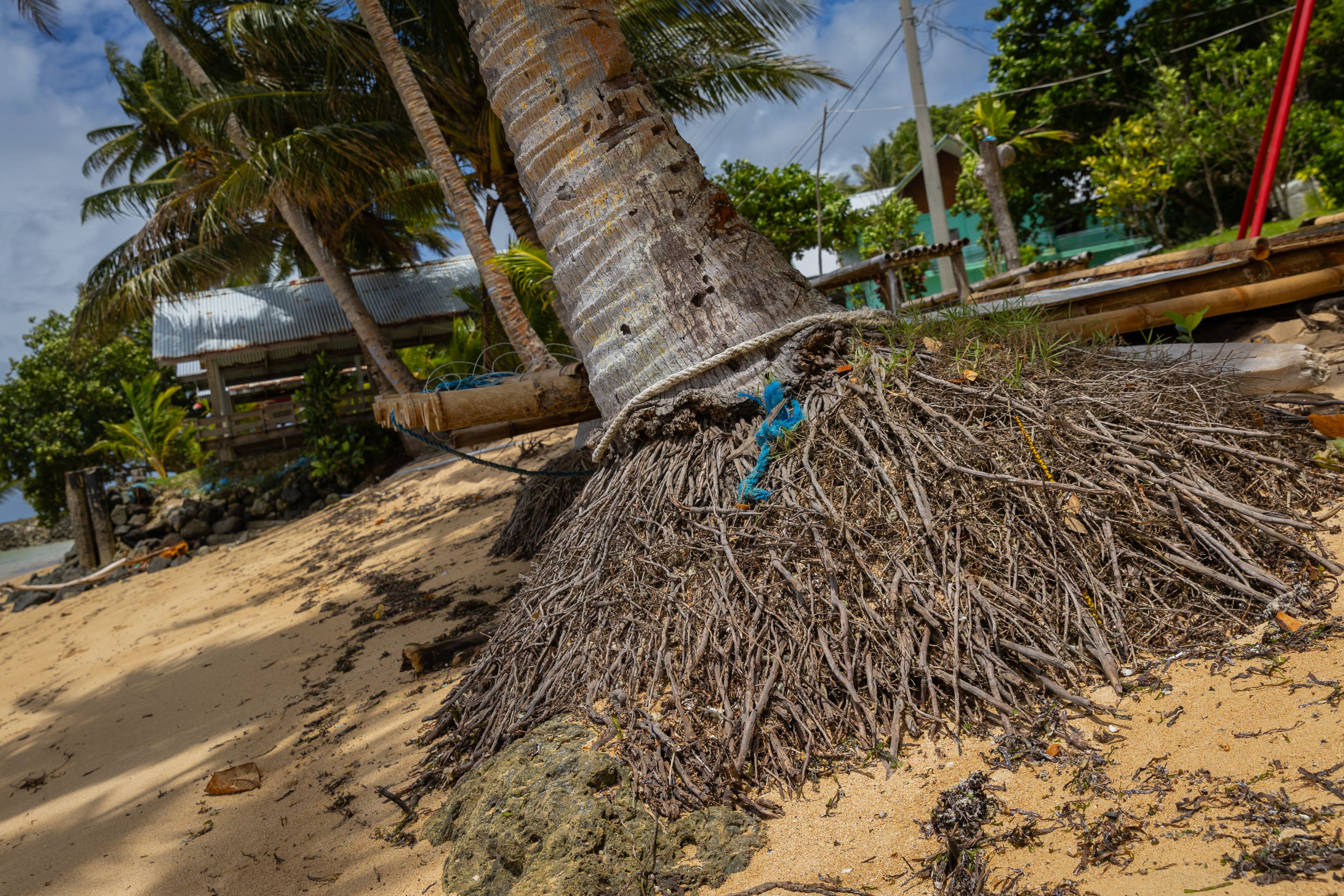
As sea levels rise and wave action intensifies, the soil around trees is steadily worn away, leaving their root systems exposed and unstable. (Kiara Worth/IISD/Palau Office of Climate Change)
As sea levels rise and wave action intensifies, the soil around trees is steadily worn away, leaving their root systems exposed and unstable. (Kiara Worth/IISD/Palau Office of Climate Change)
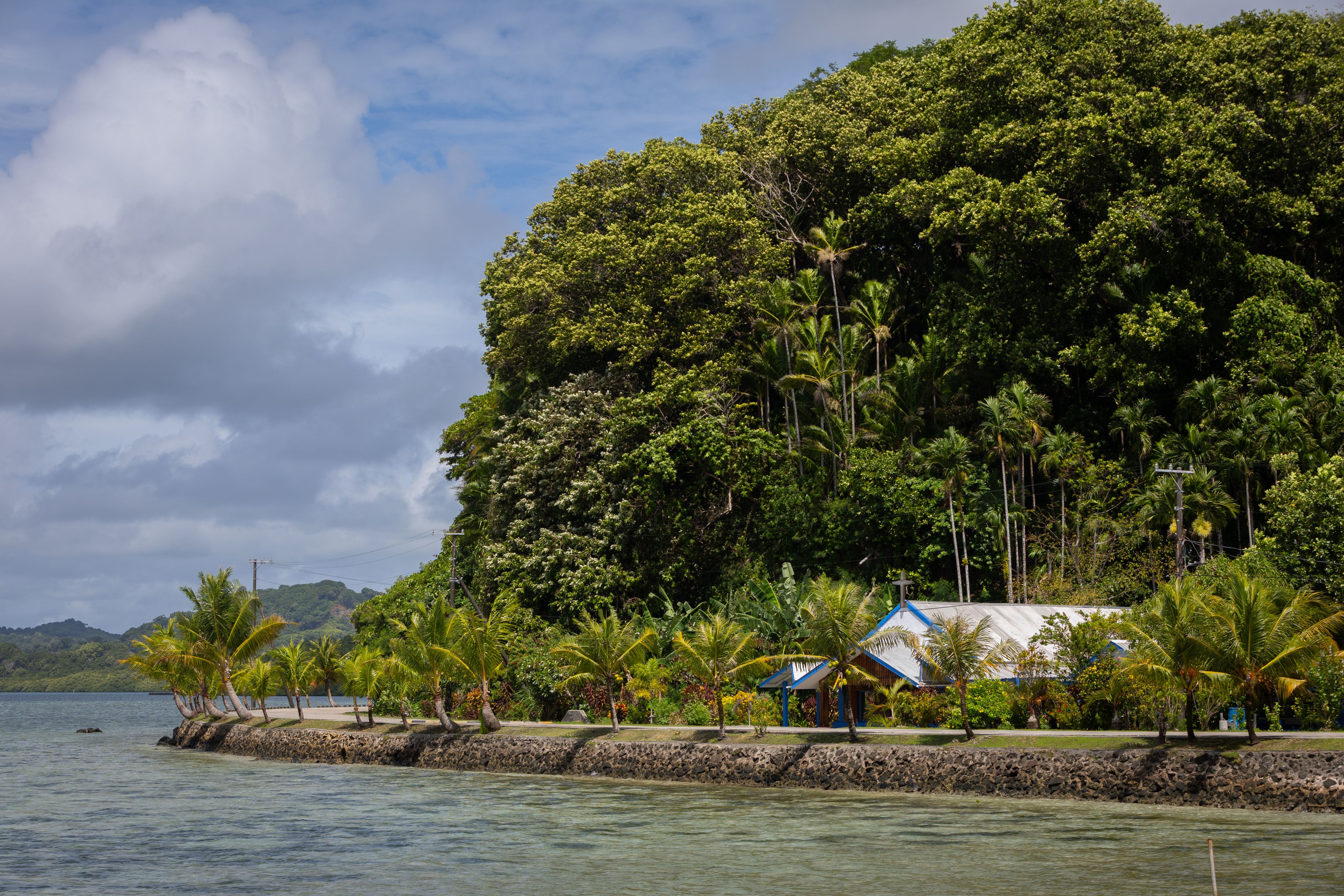
Rising sea levels and stronger storms are eroding Palau’s coastline, threatening coastal roads and nearby communities located just meters from the shore. (Kiara Worth/IISD/Palau Office of Climate Change)
Rising sea levels and stronger storms are eroding Palau’s coastline, threatening coastal roads and nearby communities located just meters from the shore. (Kiara Worth/IISD/Palau Office of Climate Change)

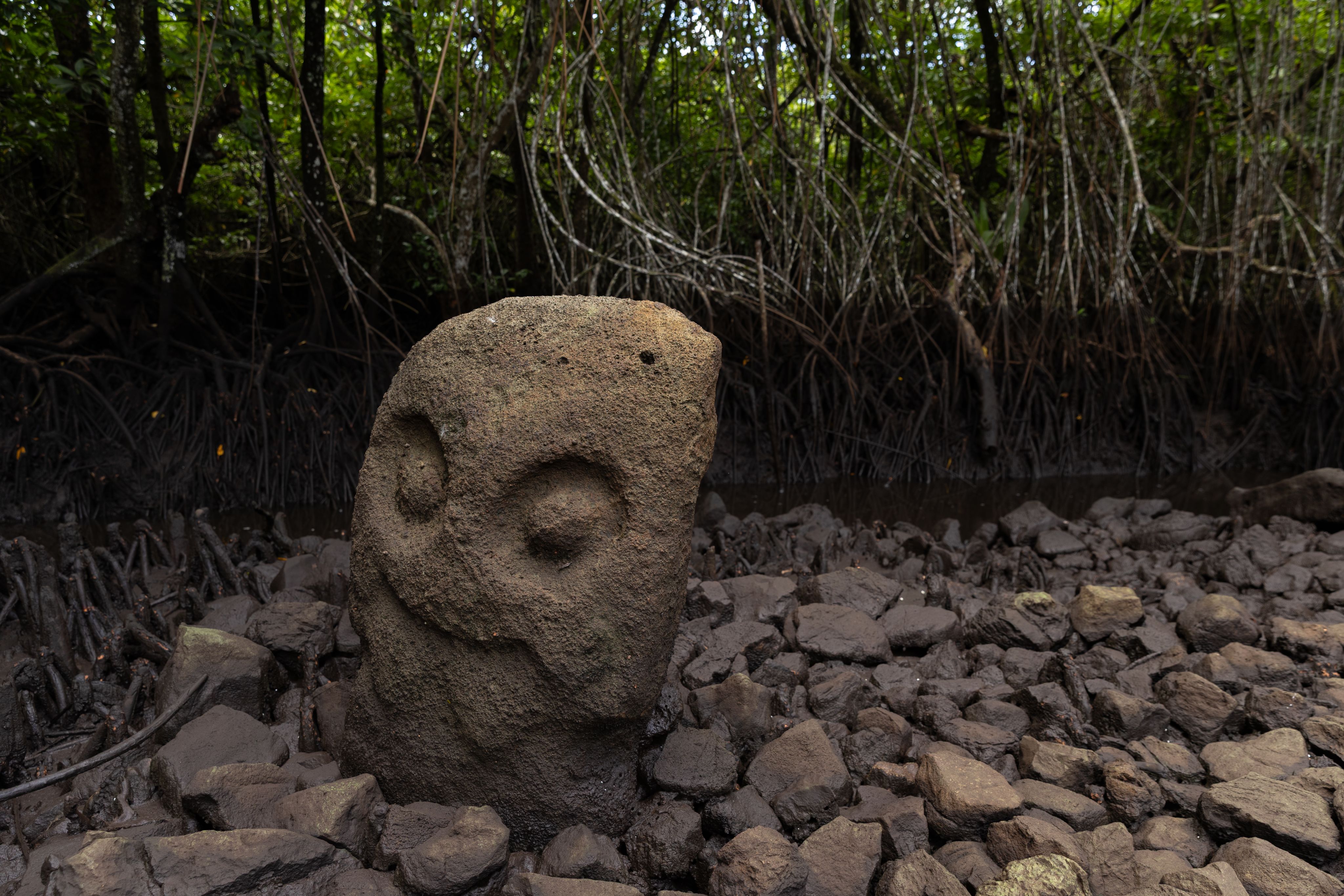
Rising water, disappearing history: this carved stone face at Ngerutechei has stood for generations. (Kiara Worth/IISD/Palau Office of Climate Change)
Rising water, disappearing history: this carved stone face at Ngerutechei has stood for generations. (Kiara Worth/IISD/Palau Office of Climate Change)
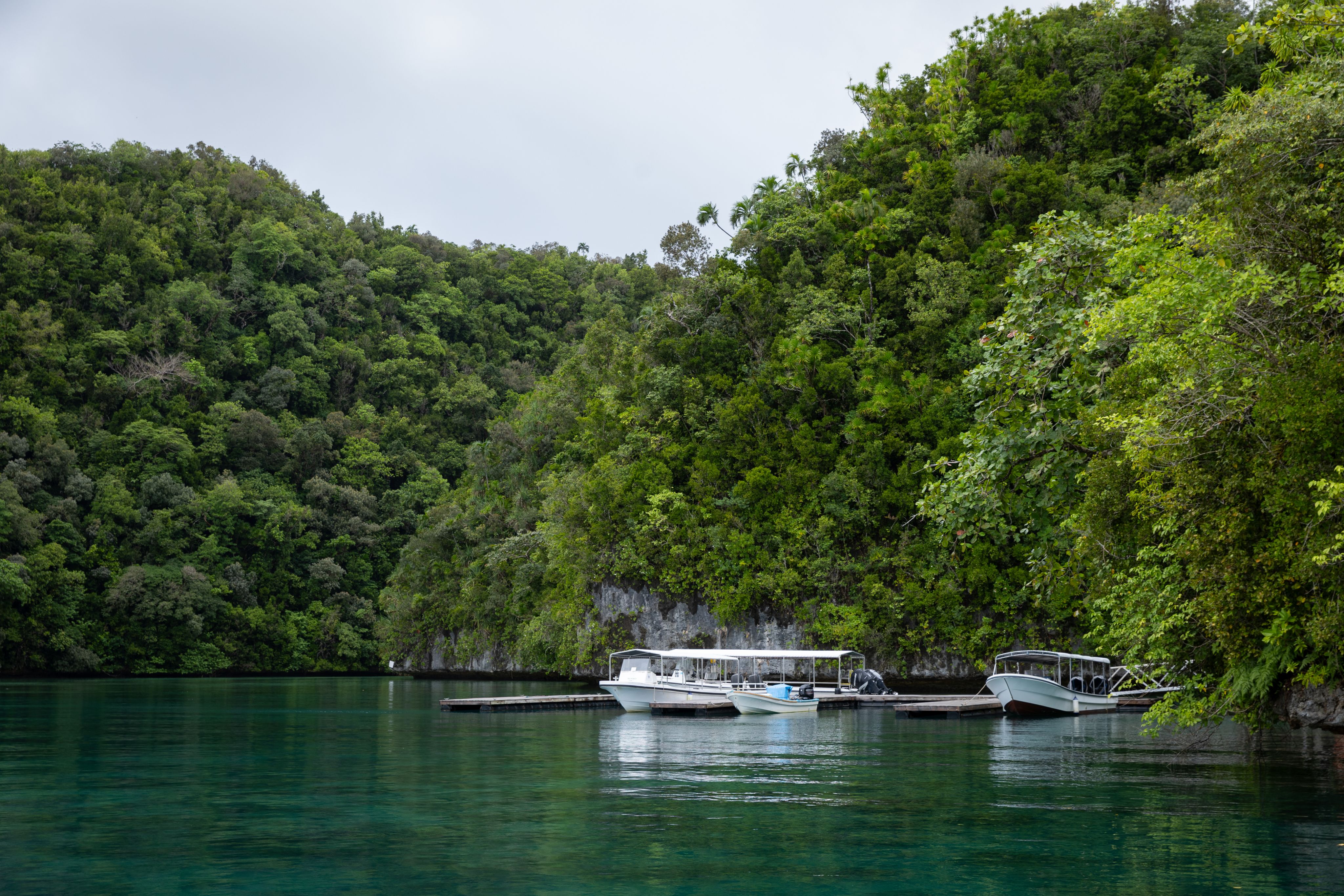
The natural systems that buffer Palau's communities are also under pressure. Its forests—towering trees, tangled vines, and undergrowth alive with the movement of birds, insects, and animals—are not only vital to watershed stability, but are an ecosystem rich in biodiversity, home to endemic species and delicate habitats that play a vital role in maintaining Palau’s environmental balance. Preserving access to these areas means protecting both cultural heritage and the living systems that surround it. Its mangrove ecosystems, which provide critical shoreline protection, face growing stress from shifting temperature and precipitation patterns. Understanding and responding to these compounding risks is the core challenge that Palau's adaptation framework is designed to address.

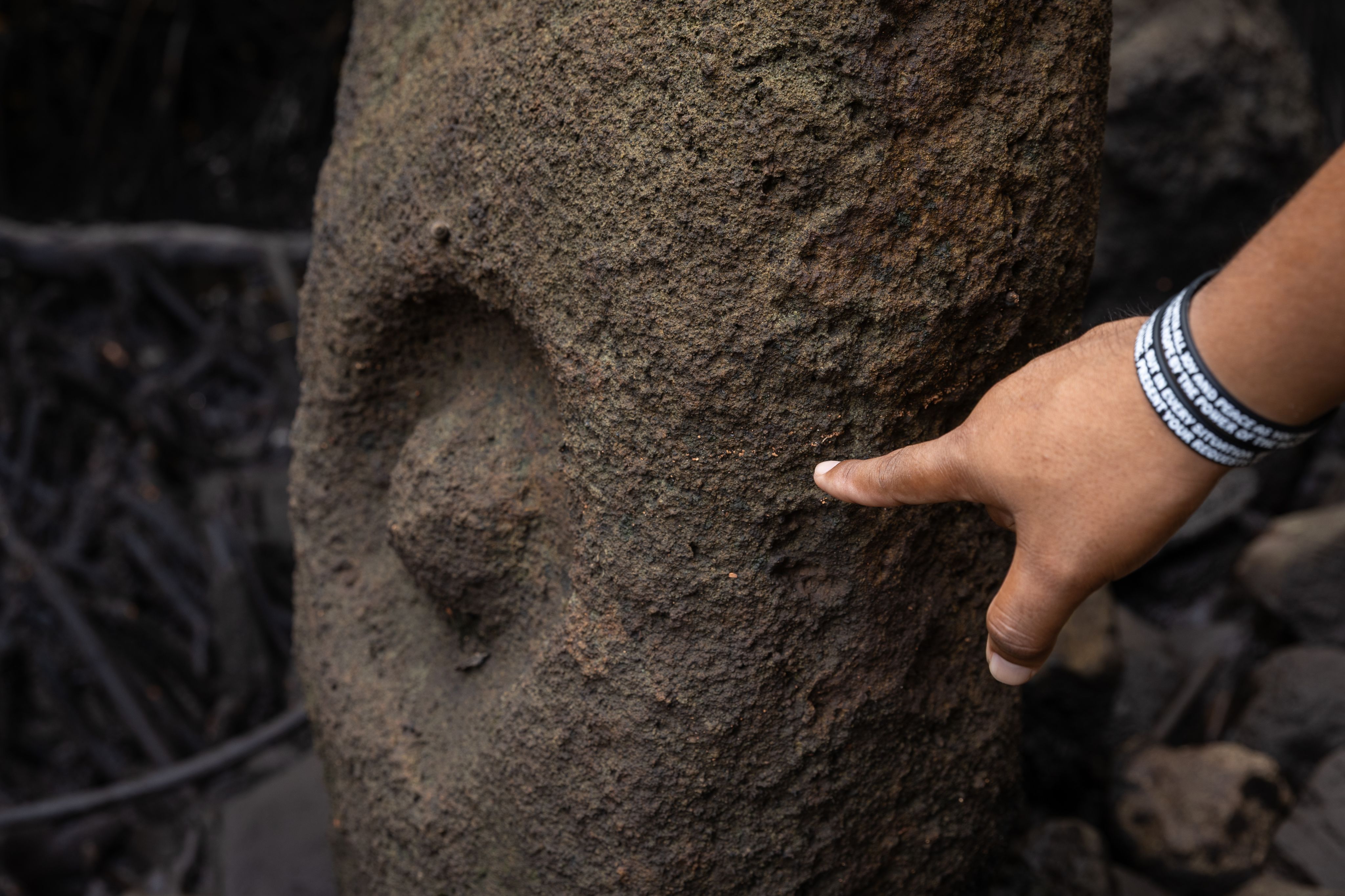
At Ngerutechei, a man traces the waterline rising across a carved stone face, a mark of how far the sea has already come for Palau's ancient heritage. (Kiara Worth/IISD/Palau Office of Climate Change)
At Ngerutechei, a man traces the waterline rising across a carved stone face, a mark of how far the sea has already come for Palau's ancient heritage. (Kiara Worth/IISD/Palau Office of Climate Change)
The threat to Palau's cultural heritage is equally pressing. The ancient stone monoliths at Ngerutechei, among the most significant archaeological sites in the Pacific, are now in direct jeopardy. Storm erosion has destabilized the embankments surrounding the monolith platform, causing several monoliths to fall. Without sustained protective intervention, these sites—and the historical and cultural knowledge they embody—face permanent loss within a generation.
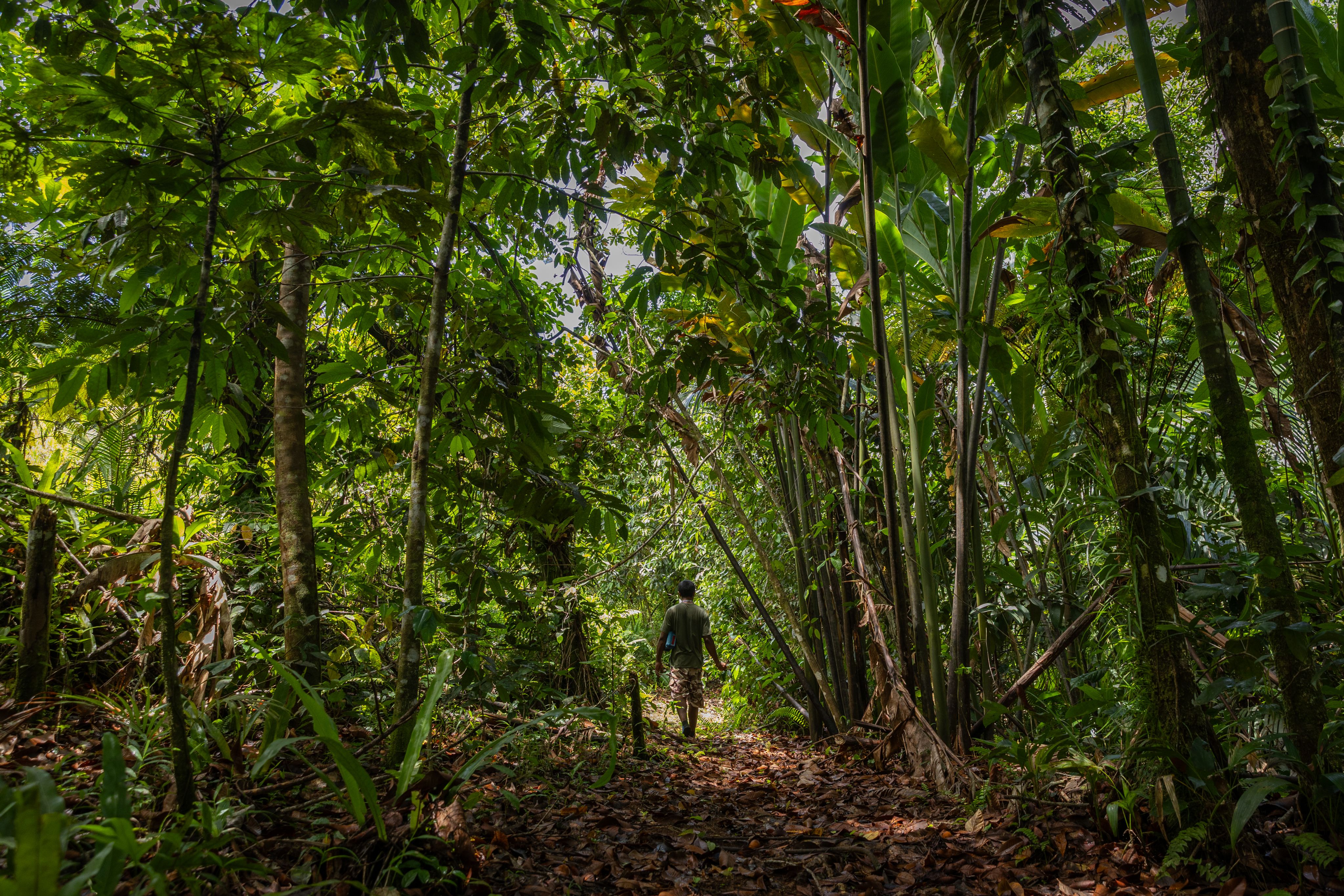
Shaquill Renguul, Ngeremlengui State Representative, leads the way through the dense forest on the path to Ngerutechei. (Kiara Worth/IISD/Palau Office of Climate Change)
Shaquill Renguul, Ngeremlengui State Representative, leads the way through the dense forest on the path to Ngerutechei. (Kiara Worth/IISD/Palau Office of Climate Change)
Kiara Worth/IISD/Palau Office of Climate Change
Kiara Worth/IISD/Palau Office of Climate Change
Governance as the Foundation: Palau’s national adaptation plan process
Effective climate adaptation requires more than community goodwill or isolated technical projects—it demands coherent governance structures capable of coordinating action across sectors and scales. Recognizing this, the Government of Palau, through its Office of Climate Change (OCC) within the Ministry of Finance, is developing the country's first stand-alone national adaptation plan (NAP), anticipated for adoption in 2026.
The NAP process, supported by the Green Climate Fund, is designed around a whole-of-society approach. It encompasses 10 priority sectors—including water security, food security, coastal protection, infrastructure, health, and cultural heritage—and aims to translate risk assessment into coordinated, funded, and implementable adaptation strategies.

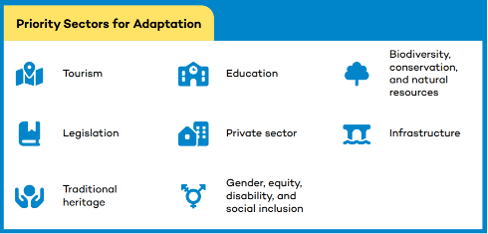
Source: Government of Palau.
Source: Government of Palau.
Critically, the process is not conceived as a top-down planning exercise. From the outset, it has been designed to integrate community knowledge, state-level governance, and national policy into a coherent and mutually reinforcing framework. This approach reflects a broader principle that runs through Palau's adaptation work: that durable climate resilience cannot be imposed from outside or above but must be rooted in the knowledge and priorities of those most directly affected. The NAP process is the institutional expression of that principle—the structure through which Palau is attempting to make that integration systematic rather than ad hoc.

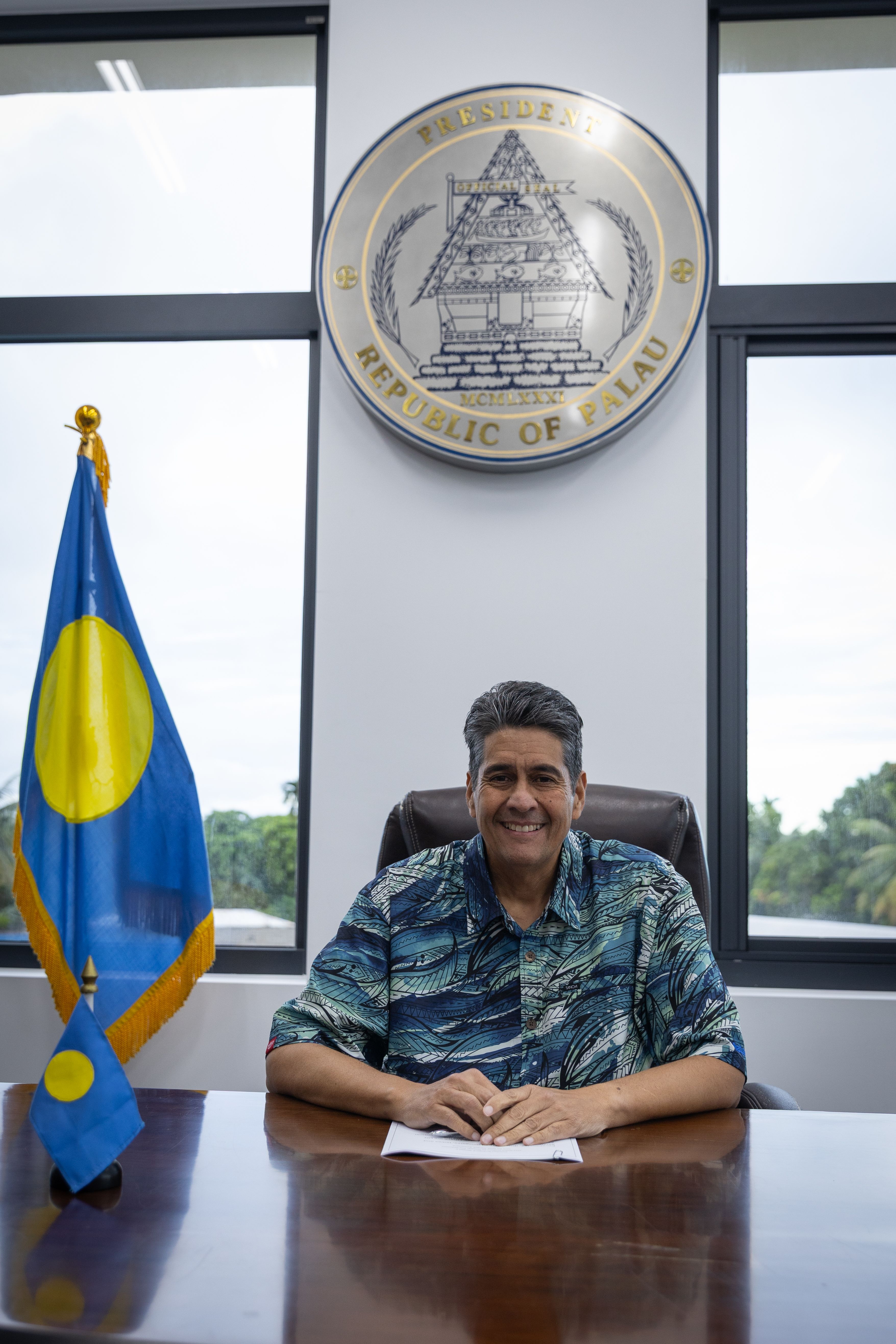
The Palau government is preparing its first NAP and updating the Palau Climate Change Policy under the leadership of President Surangel Whipps Jr. (Kiara Worth/IISD/Palau Office of Climate Change)
The Palau government is preparing its first NAP and updating the Palau Climate Change Policy under the leadership of President Surangel Whipps Jr. (Kiara Worth/IISD/Palau Office of Climate Change)
The People at the Heart of Adaptation
No governance framework, however well-designed, functions without the people who implement it. At the centre of Palau’s adaptation efforts are people deeply connected to place: community leaders, rangers, elders, youth, and farmers all play vital roles in shaping how the country responds to climate change. Adaptation efforts are sustained by individuals who combine formal roles with deep local knowledge and long-standing community relationships, a combination that technical expertise alone cannot replicate.
For adaptation efforts to succeed, strong partnerships between government, state representatives, and communities are essential. These individuals illustrate a core principle of Palau's adaptation approach: that the most effective responses to climate change are those that build on existing community knowledge, relationships, and stewardship practices, rather than seeking to replace them. It’s not just about policy—it’s about people who know the land, who walk it, remember it, and are committed to protecting it for future generations.
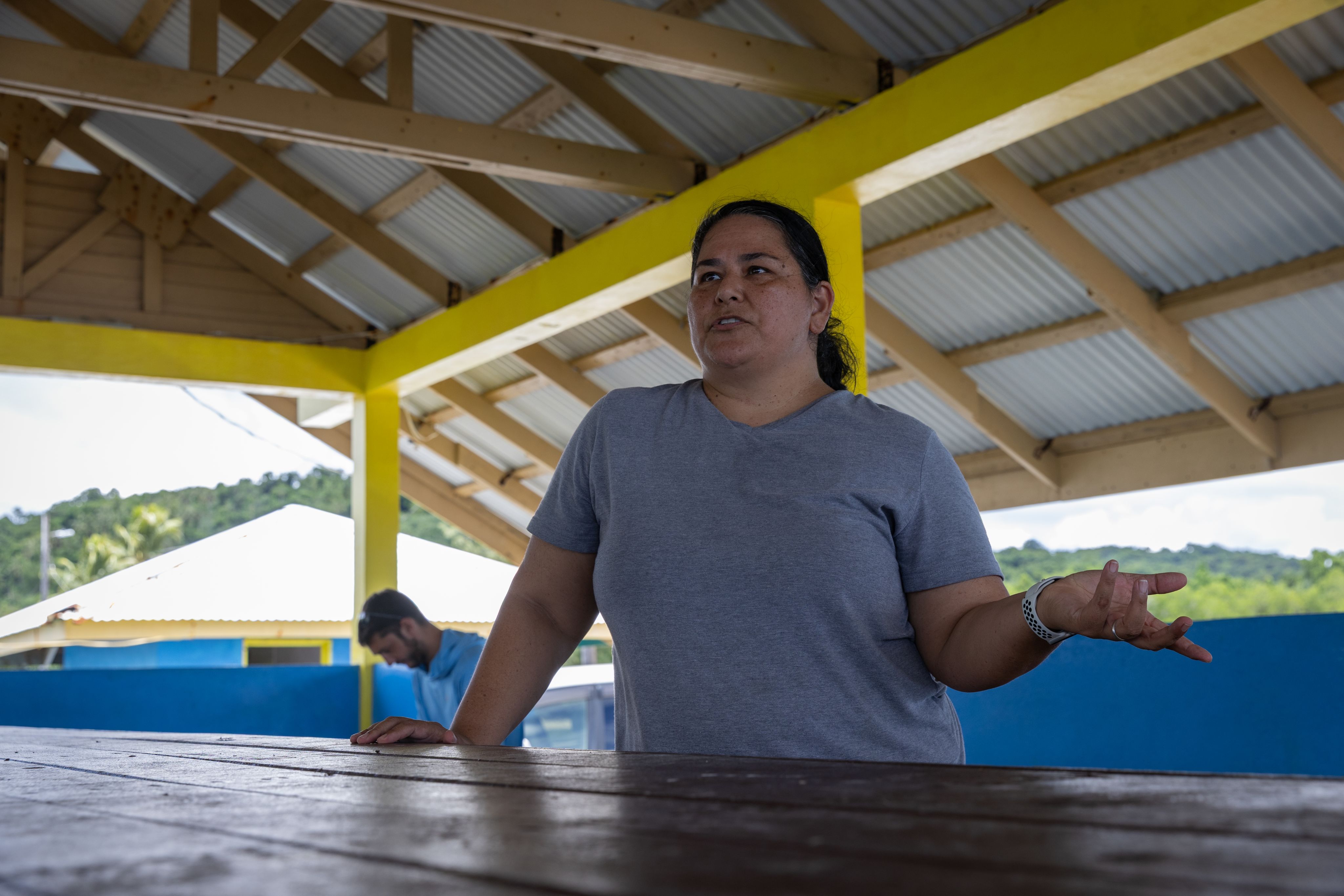
Jennifer Koskelin-Gibbons, Palau Pledge Co-Founder, exemplifies this dynamic. Her effectiveness as an adaptation leader is grounded not only in her professional expertise but in her fluency in the local language, her understanding of cultural protocols, and her relationships within the communities she works alongside. In contexts where trust and local legitimacy are prerequisites for meaningful engagement, these qualities are not incidental; they are essential. (Kiara Worth/IISD/Palau Office of Climate Change)
Jennifer Koskelin-Gibbons, Palau Pledge Co-Founder, exemplifies this dynamic. Her effectiveness as an adaptation leader is grounded not only in her professional expertise but in her fluency in the local language, her understanding of cultural protocols, and her relationships within the communities she works alongside. In contexts where trust and local legitimacy are prerequisites for meaningful engagement, these qualities are not incidental; they are essential. (Kiara Worth/IISD/Palau Office of Climate Change)
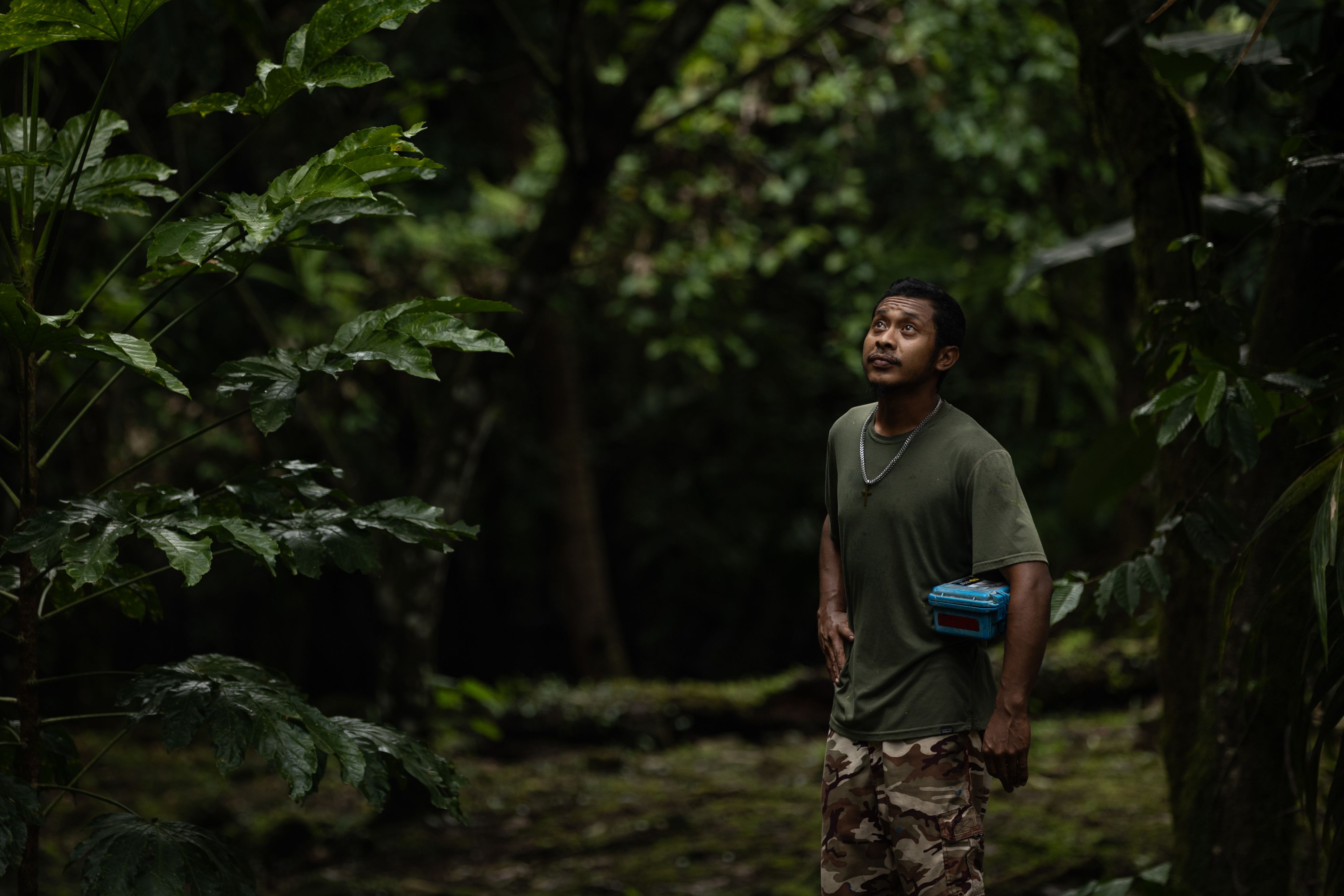
Shaquill Renguul, Ngeremlengui State Representative and descendant of Ngerutechei village, brings a parallel form of situated knowledge to Palau's adaptation process. His role bridges formal political responsibility and deep familiarity with the land, history, and community dynamics of the areas he represents. His participation in the NAP process reflects the recognition that effective climate governance must draw on both technical capacity and place-based understanding—the two are not interchangeable. (Kiara Worth/IISD/Palau Office of Climate Change)
Shaquill Renguul, Ngeremlengui State Representative and descendant of Ngerutechei village, brings a parallel form of situated knowledge to Palau's adaptation process. His role bridges formal political responsibility and deep familiarity with the land, history, and community dynamics of the areas he represents. His participation in the NAP process reflects the recognition that effective climate governance must draw on both technical capacity and place-based understanding—the two are not interchangeable. (Kiara Worth/IISD/Palau Office of Climate Change)
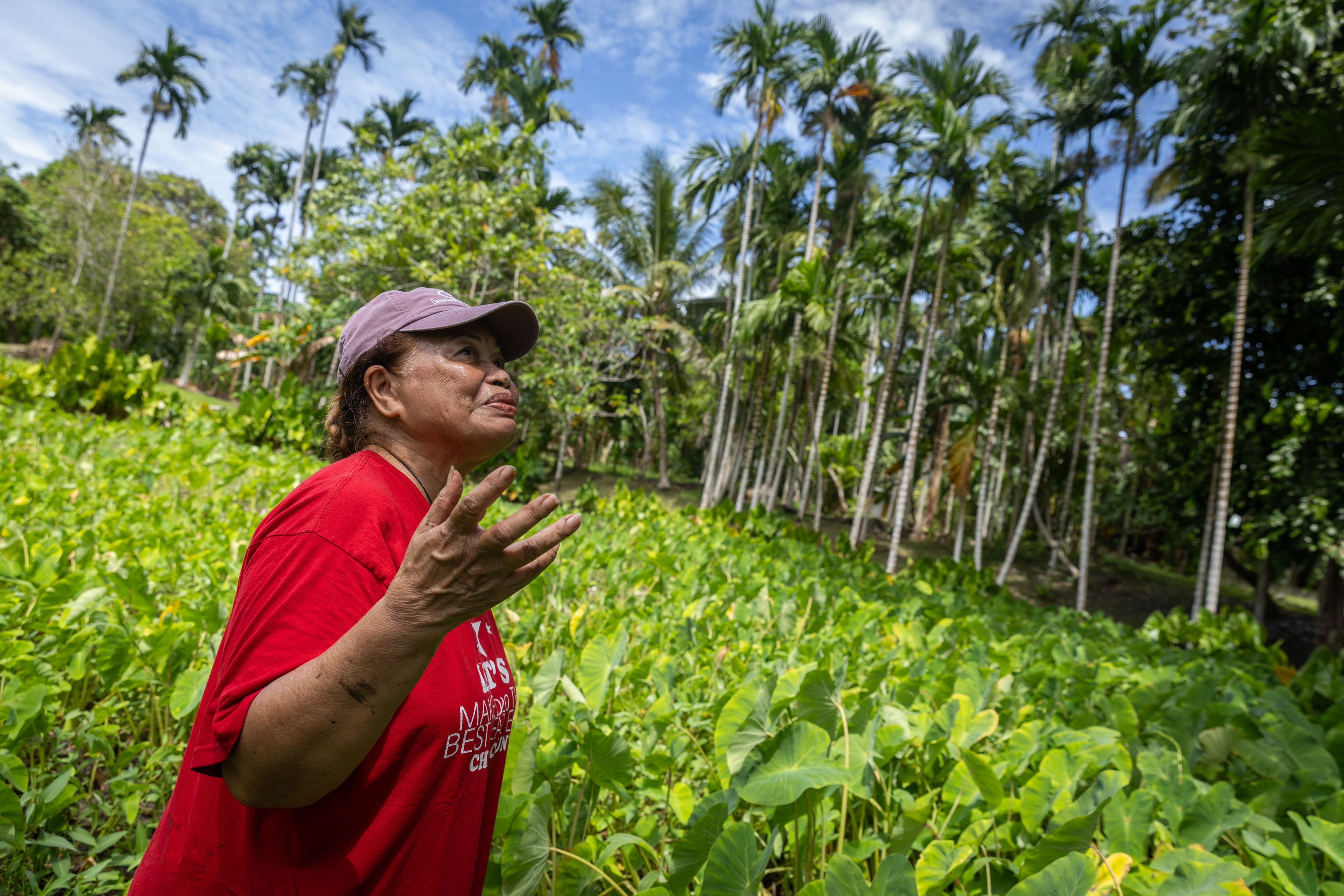
Carol Emaurois, local farmer and women’s leader, represents a dimension of adaptation that formal planning processes can struggle to capture: traditional ecological knowledge accumulated across generations of careful observation. Her understanding of local weather patterns, seasonal rhythms, and agricultural systems—inherited from her mother and grandmother—provides a baseline of environmental knowledge that long predates modern monitoring systems. As climate change disrupts established patterns of rainfall, temperature, and ocean behaviour, this kind of Indigenous knowledge offers both historical context and practical guidance. It informs decisions about planting, growing, and community preparedness in ways that complement, rather than duplicate, formal scientific data. (Kiara Worth/IISD/Palau Office of Climate Change)
Carol Emaurois, local farmer and women’s leader, represents a dimension of adaptation that formal planning processes can struggle to capture: traditional ecological knowledge accumulated across generations of careful observation. Her understanding of local weather patterns, seasonal rhythms, and agricultural systems—inherited from her mother and grandmother—provides a baseline of environmental knowledge that long predates modern monitoring systems. As climate change disrupts established patterns of rainfall, temperature, and ocean behaviour, this kind of Indigenous knowledge offers both historical context and practical guidance. It informs decisions about planting, growing, and community preparedness in ways that complement, rather than duplicate, formal scientific data. (Kiara Worth/IISD/Palau Office of Climate Change)
Understanding Risk: Monitoring, mapping, and evidence building
Informed adaptation planning depends on robust, context-specific risk assessment. In Palau, this work is undertaken through a combination of field-based monitoring, geospatial analysis, and community-validated data collection—an approach designed to ensure that national planning reflects the actual, on-the-ground realities of climate impact.

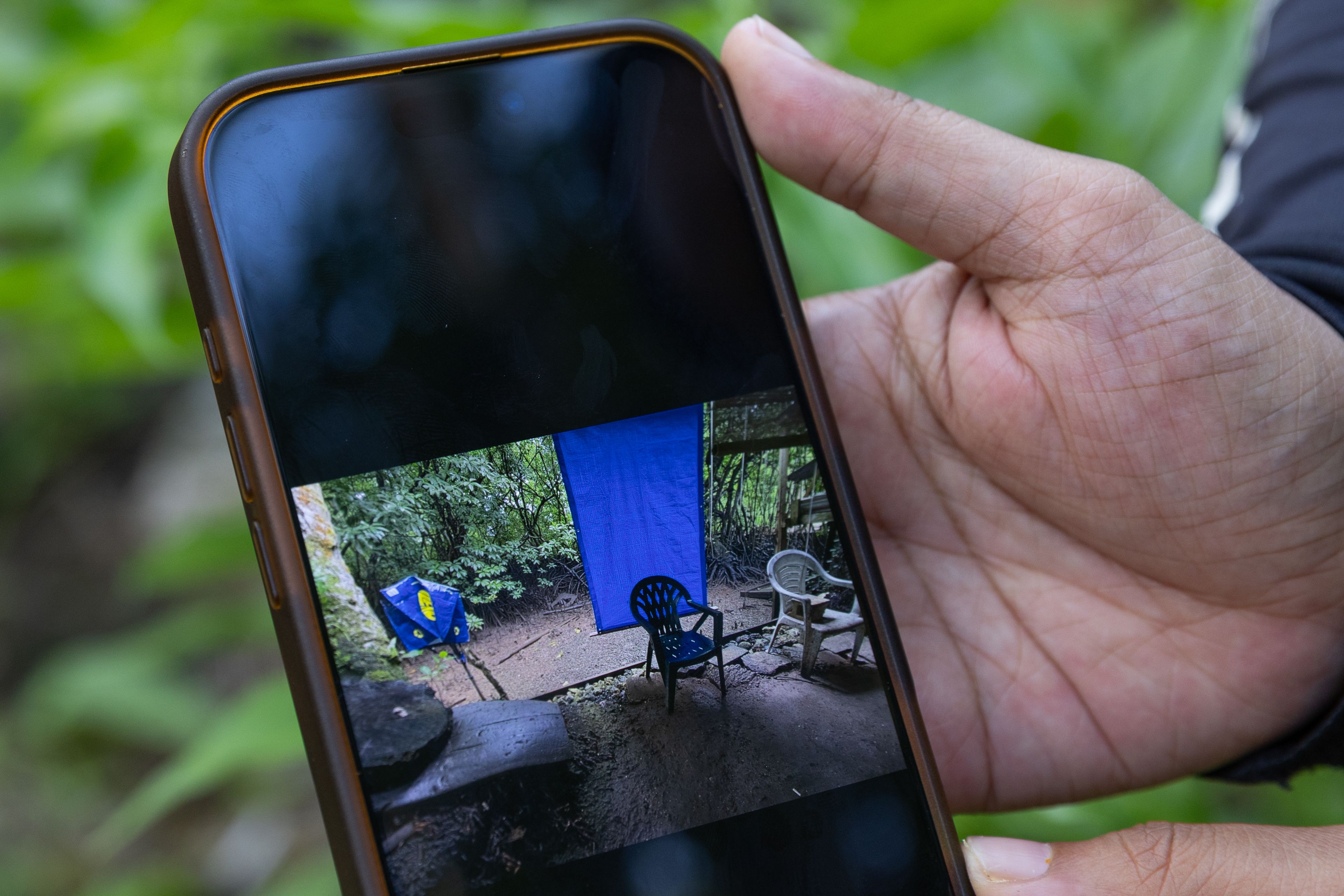
Flood damage to a home is recorded on a phone—the critical data used to inform national adaptation plans. (Kiara Worth/IISD/Palau Office of Climate Change)
Flood damage to a home is recorded on a phone—the critical data used to inform national adaptation plans. (Kiara Worth/IISD/Palau Office of Climate Change)
OCC representatives regularly visit coastal villages, agricultural areas, mangroves, and infrastructure sites across Palau's islands, documenting the lived experience of climate change through direct observation. This is hands-on work. It means understanding the topography of a place not from a map, but from walking its hills and coastlines. It means waking before dawn to observe tidal surges or making calls to friends and family for access to homes and lands impacted by floods or drought. It means witnessing firsthand the saltwater intrusion into taro fields, the erosion of sea walls, and the shifting storm patterns affecting communities. This fieldwork isn’t just anecdotal; it generates qualitative and quantitative data that directly informs the evidence base for the NAP, ensuring policies aren’t made in isolation but are grounded in real experience. In small island states where baseline data is often limited, this kind of systematic, place-based documentation is foundational.
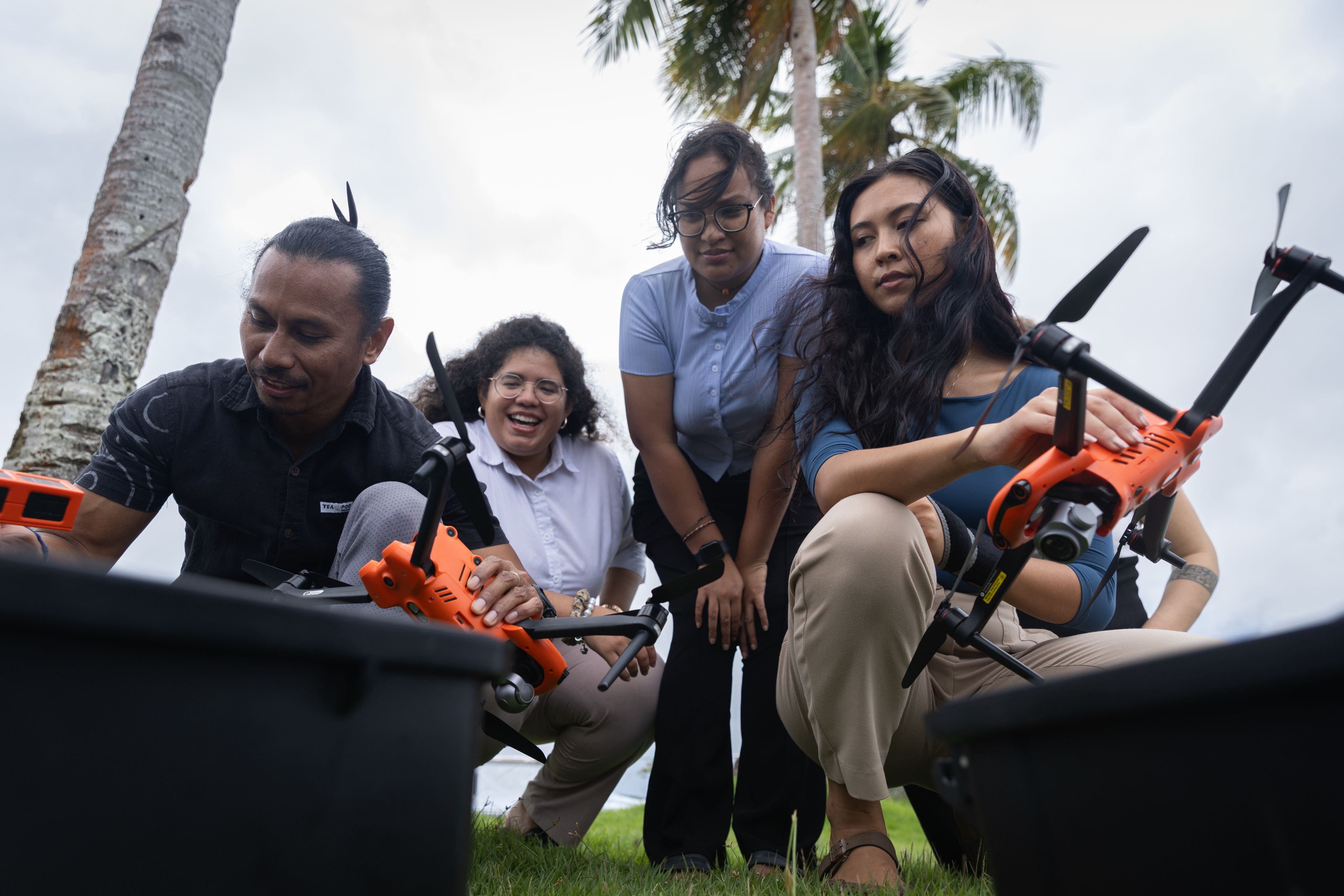
Toni Soalablai and members of the OCC use drones to gather data on Palau’s shoreline erosion, flooding patterns, and infrastructure vulnerability. (Kiara Worth/IISD/Palau Office of Climate Change)
Toni Soalablai and members of the OCC use drones to gather data on Palau’s shoreline erosion, flooding patterns, and infrastructure vulnerability. (Kiara Worth/IISD/Palau Office of Climate Change)
The OCC has also invested in building technical capacity for remote sensing and aerial documentation. Recent drone operation training has equipped the team to gather high-resolution imagery of coastal change, land-use shifts, and infrastructure exposure across islands that are otherwise difficult to access. This capability supports more precise monitoring over time and generates visual evidence that strengthens both planning processes and public communication of climate risks.
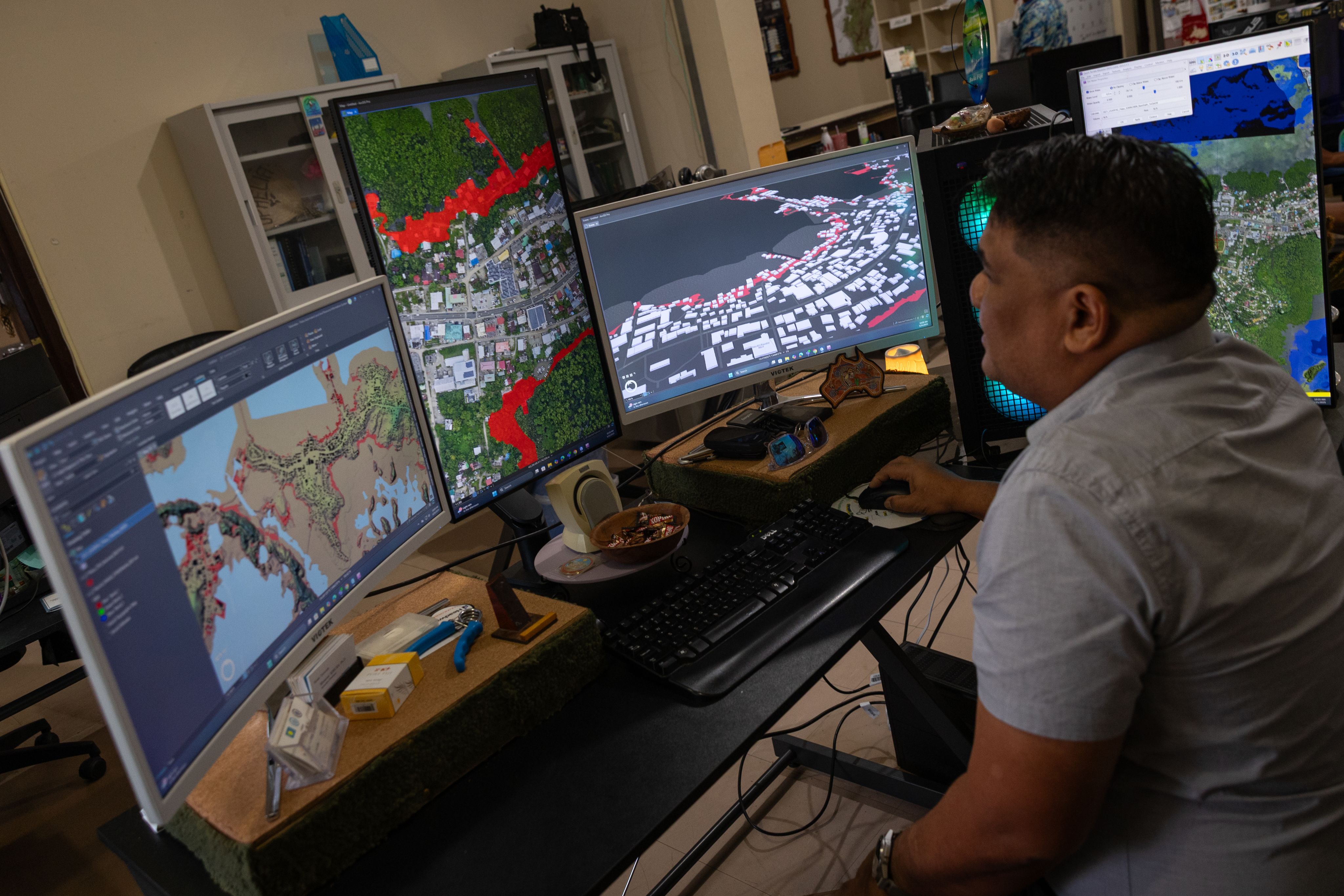
David Idip, Office Manager of the Palau Automated Land and Resource Information System, uses advanced geospatial technology to map out developing climate threats to enhance adaptation planning. (Kiara Worth/IISD/Palau Office of Climate Change)
David Idip, Office Manager of the Palau Automated Land and Resource Information System, uses advanced geospatial technology to map out developing climate threats to enhance adaptation planning. (Kiara Worth/IISD/Palau Office of Climate Change)
Complementing this is the use of Light Detection and Ranging (LiDAR) technology, which generates detailed three-dimensional terrain maps using laser pulse data. In Palau's context, LiDAR provides granular elevation data critical to modelling sea level rise scenarios, identifying flood-prone zones, and assessing the vulnerability of key infrastructure, such as roads, bridges, and residential areas. This data underpins decisions on land-use planning, the siting of new development, and the design of evacuation routes and emergency shelter locations. Following disaster events, the same maps support rapid damage assessment and recovery coordination.
Cultural site monitoring follows a similar methodology. At Ngerutechei, OCC staff and community representatives conduct regular documentation visits, tracking changes to the physical condition of the monolith platforms and other cultural heritage sites, as well as to the surrounding landscape over time. This consistent, place-based record-keeping is what makes protective intervention possible—without it, decisions about where and how to act would lack the evidentiary basis needed to justify investment and prioritize resources.
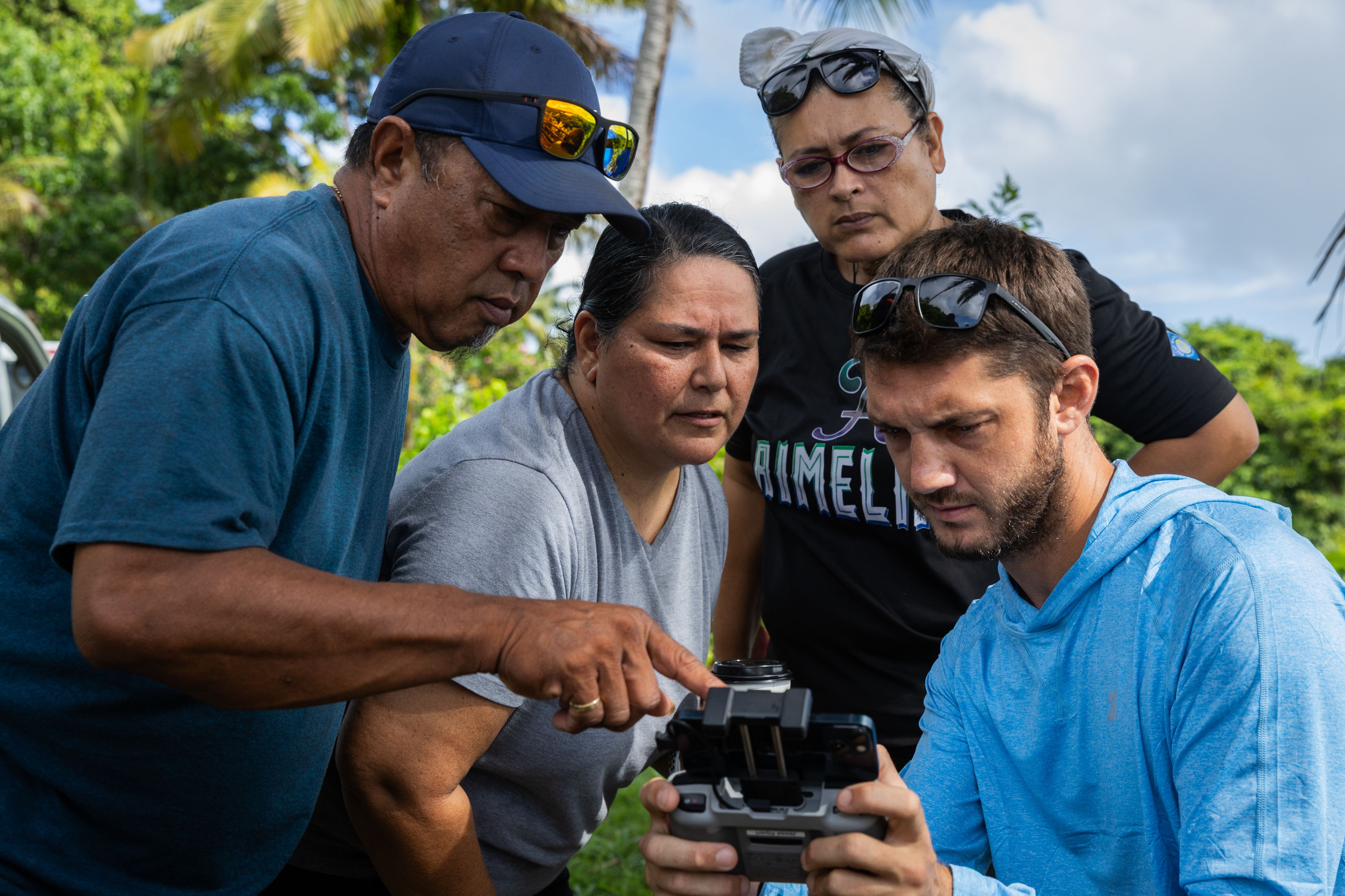
Jen Koskelin-Gibbons (second from left), Co-Founder Palau Legacy Project, Palau Pledge & Ol’au Palau, and colleagues undertaking mapping for land-use planning and for managing conservation areas like Ngaremeduu Bay. (Kiara Worth/IISD/Palau Office of Climate Change)
Jen Koskelin-Gibbons (second from left), Co-Founder Palau Legacy Project, Palau Pledge & Ol’au Palau, and colleagues undertaking mapping for land-use planning and for managing conservation areas like Ngaremeduu Bay. (Kiara Worth/IISD/Palau Office of Climate Change)
Across all of these activities, a defining feature of Palau's approach is the integration of community participation in the production of knowledge. The mapping of Ngaremeduu Bay Conservation Area, for instance, involves representatives from the three states—Ngatpang, Aimeliik, and Ngeremlengui—who participate in identifying, confirming, and validating spatial data. Knowing where ecosystems and land features are located helps determine which zones should be protected, what types of activities can take place within those zones, and how to balance environmental priorities with community needs. Mapping helps identify potential trails, bungalow locations, and cultural sites, ensuring tourism is both respectful and regenerative. This process ensures that technical outputs reflect local knowledge and maintain community trust—a critical factor in the long-term usability of the data.

Adaptation in Action: Implementation across sectors
Against this backdrop of risk and evidence building, Palau is implementing a range of adaptation measures that span nature-based solutions, agricultural innovation, community-led infrastructure, and cultural preservation. What distinguishes many of these efforts is their integration of traditional knowledge and practice with contemporary tools and formal planning frameworks.
Nature-Based Coastal Protection
Kiara Worth/IISD/Palau Office of Climate Change
Kiara Worth/IISD/Palau Office of Climate Change
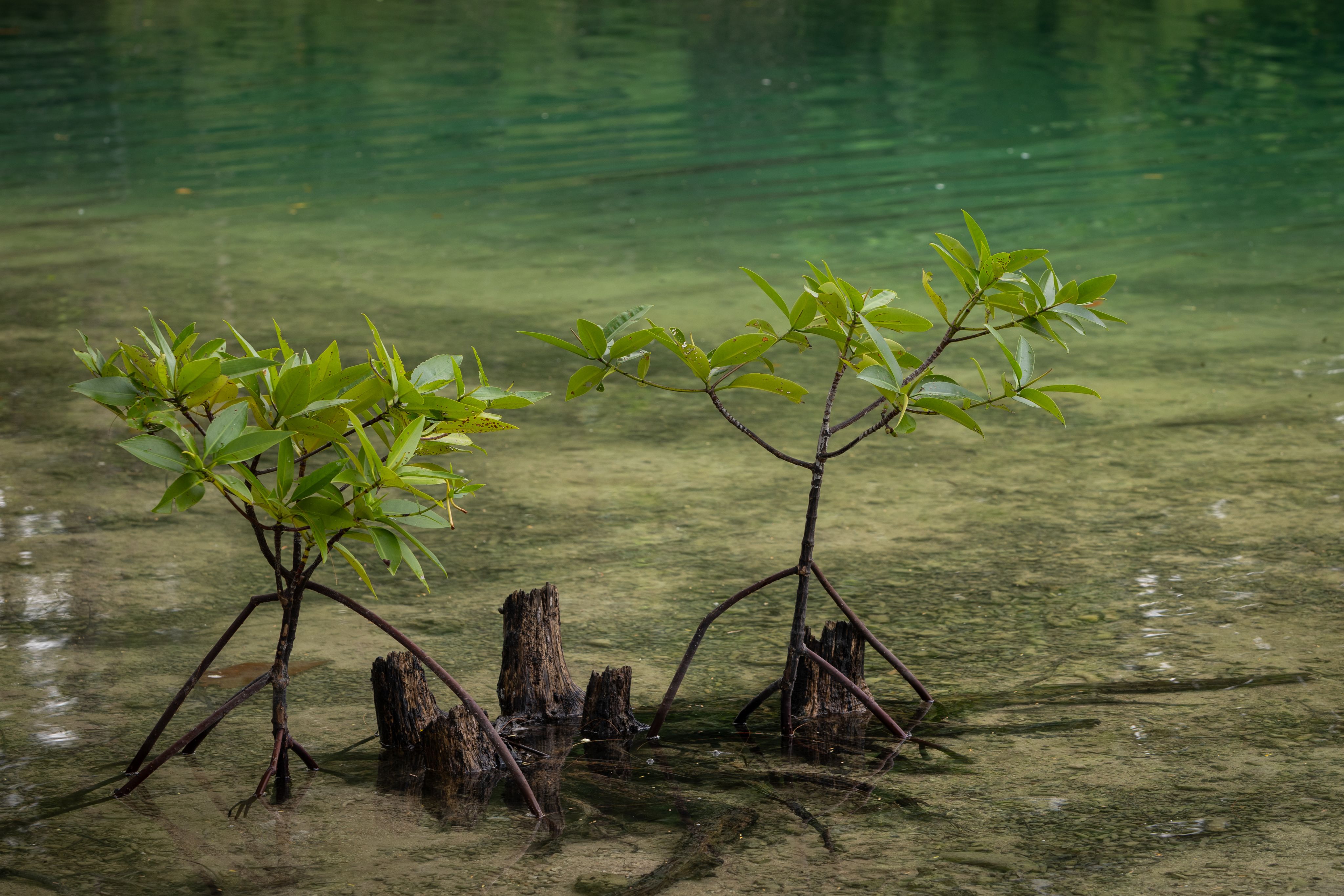
The mangrove forests of Ngaremeduu Bay represent some of the most ecologically significant and functionally critical ecosystems in Palau's adaptation strategy. Their dense root systems stabilize sediment, reduce wave energy, and buffer inland areas against storm surge—natural infrastructure that provides protection comparable, in many contexts, to engineered coastal defences. The conservation and restoration of these ecosystems is a central pillar of Palau's coastal adaptation approach, grounded in both their ecological function and their long-standing role in Palauan cultural and economic life.
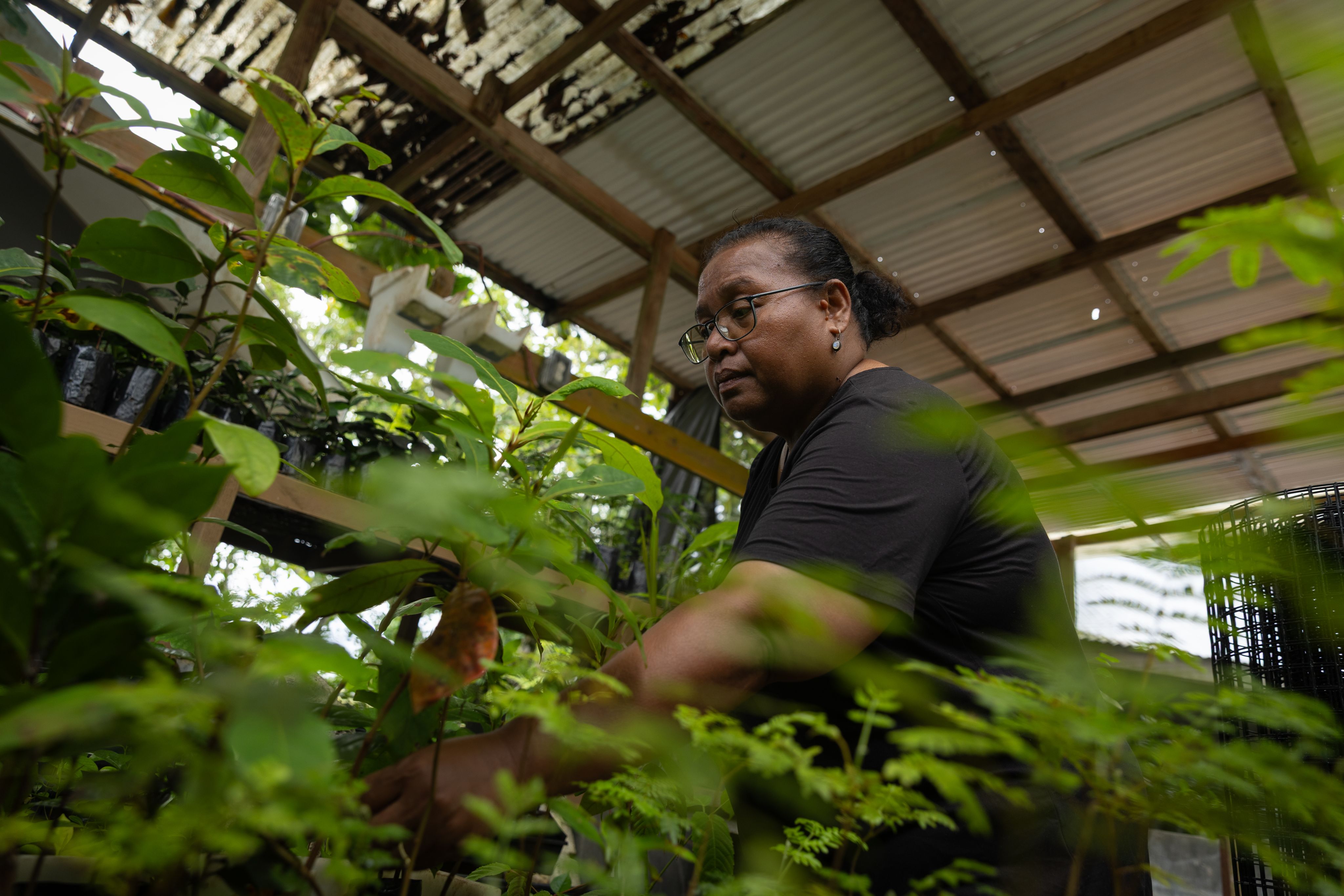
Joyce Beouch, Program Director at the Ebiil Society, attends to tree seedlings native to Palau at the Ebiil Society forest rehabilitation program to combat soil erosion. (Kiara Worth/IISD/Palau Office of Climate Change)
Joyce Beouch, Program Director at the Ebiil Society, attends to tree seedlings native to Palau at the Ebiil Society forest rehabilitation program to combat soil erosion. (Kiara Worth/IISD/Palau Office of Climate Change)
Coastal protection also takes place in the form of land rehabilitation. In Ngarchelong State, degraded land from an old mining site poses a growing environmental threat, one intensified by the pressures of climate change. As rainfall becomes heavier and storms more frequent, runoff from the hillside carries sediment directly into the ocean, clouding the water, settling along the seafloor, and smothering critical marine habitats and disrupting delicate ecological systems. In response, the Ebiil Society launched a forest rehabilitation program, not only as a restoration effort, but as a deliberate adaptation strategy to climate change. By cultivating a nursery of indigenous tree species and planting them strategically to stabilize soils, reduce erosion, and control sediment flow, this form of native species reforestation is a nature-based solution that supports climate resilience.
Climate-Resilient Agriculture
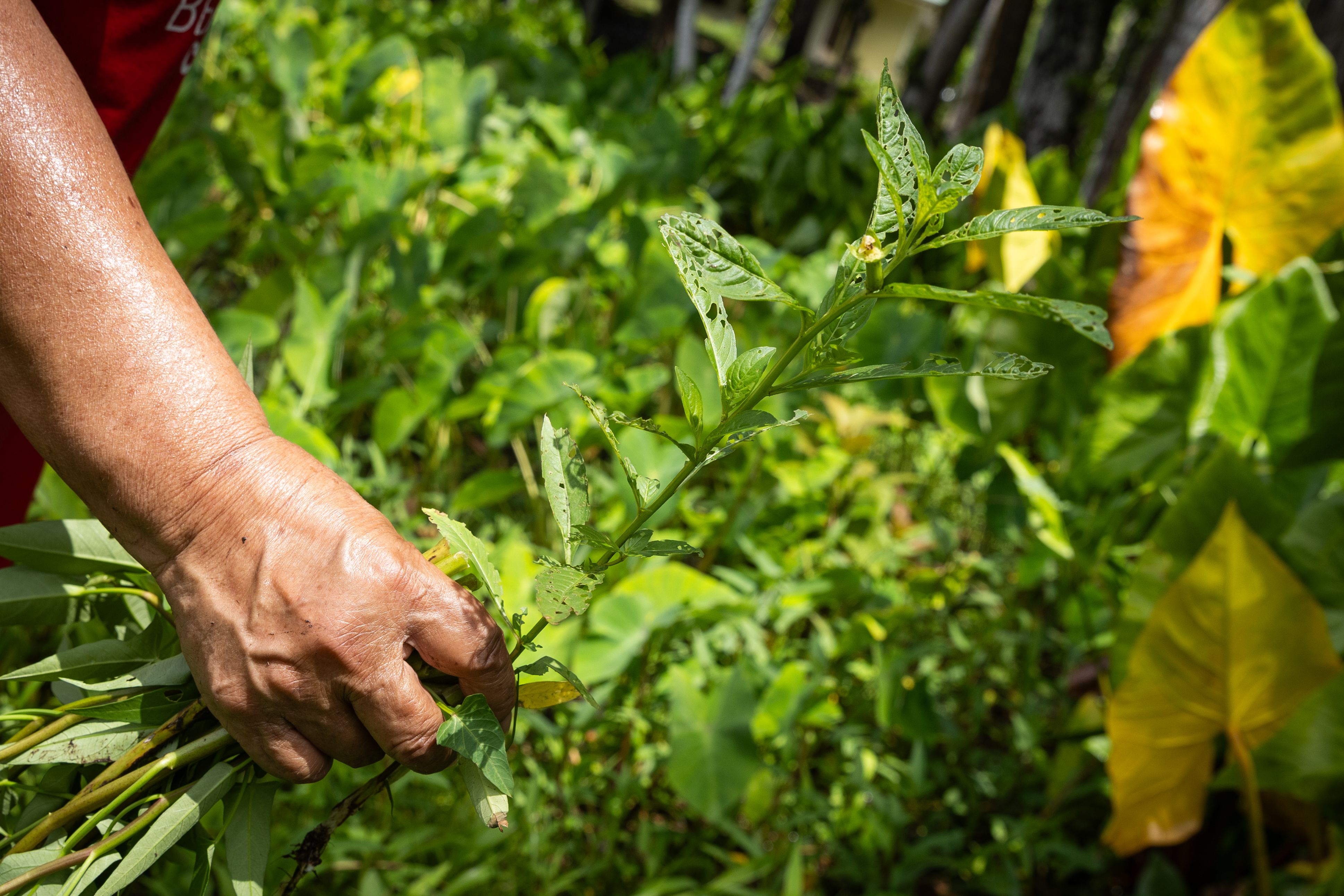
Palauan farmers are integrating climate-resilient taro varieties and revitalized traditional farming methods to sustain food production under changing conditions. One traditional technique being actively revived is the strategic use of large, structurally robust outer taro varieties as a living barrier around field perimeters. These border plants provide wind and rain protection for more delicate inner varieties, reduce soil erosion, and maintain the structural integrity of the field—a sophisticated form of integrated field management that combines ecological function with agricultural productivity.
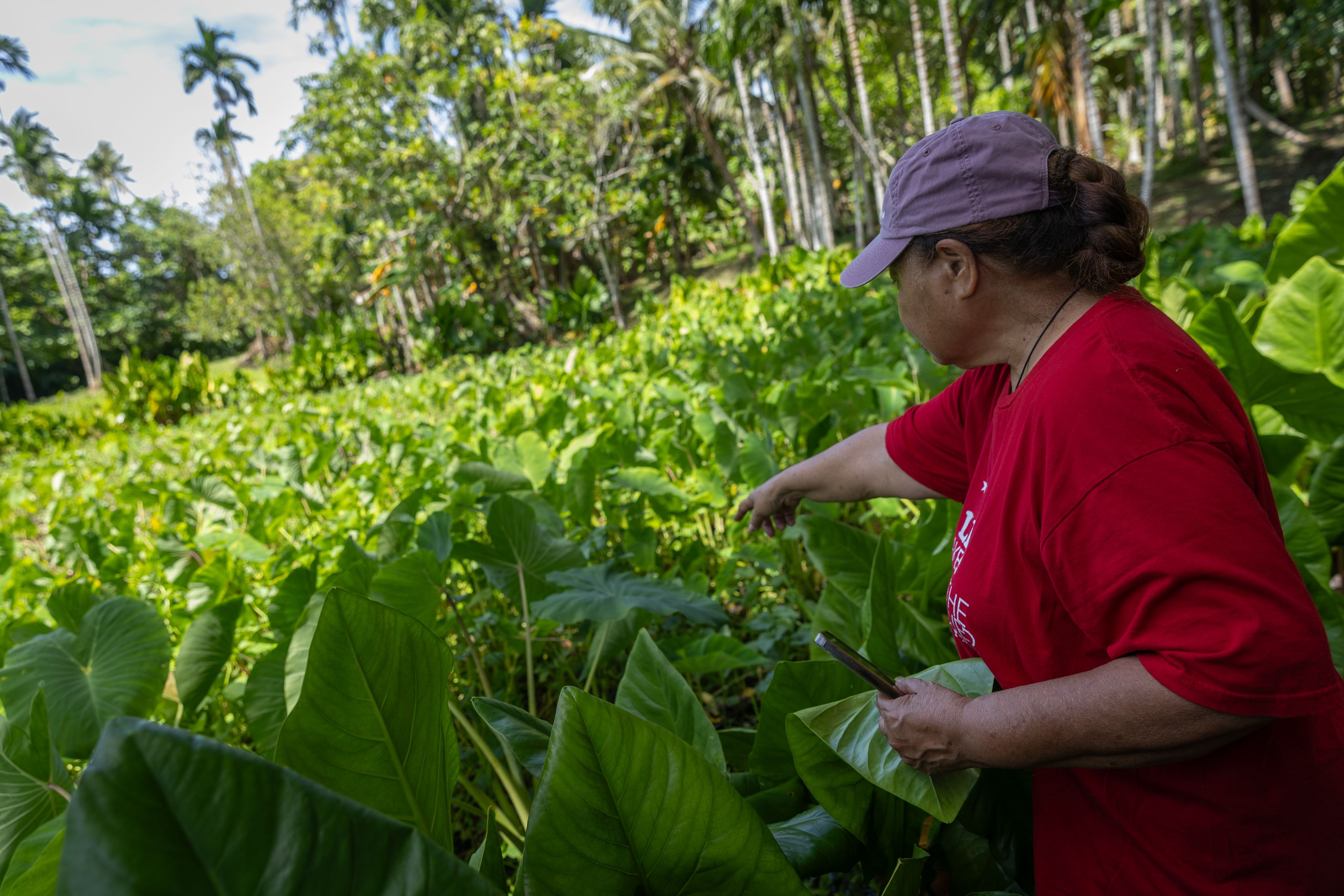
Carol Emaurois in a taro field—a crop that is both culturally significant and important to food security in Palau. (Kiara Worth/IISD/Palau Office of Climate Change)
Carol Emaurois in a taro field—a crop that is both culturally significant and important to food security in Palau. (Kiara Worth/IISD/Palau Office of Climate Change)
Alongside this, many Palauan farmers—particularly those organized through women's cooperative groups—are reaffirming organic production methods that eschew synthetic inputs in favour of natural composting and manual management. In 2023, several of these farms received formal organic certification, reflecting both the quality of the produce and the rigour of the practices employed. The combination of climate-adapted varieties, traditional field management, and certified organic methods represents a coherent and culturally grounded approach to agricultural adaptation.
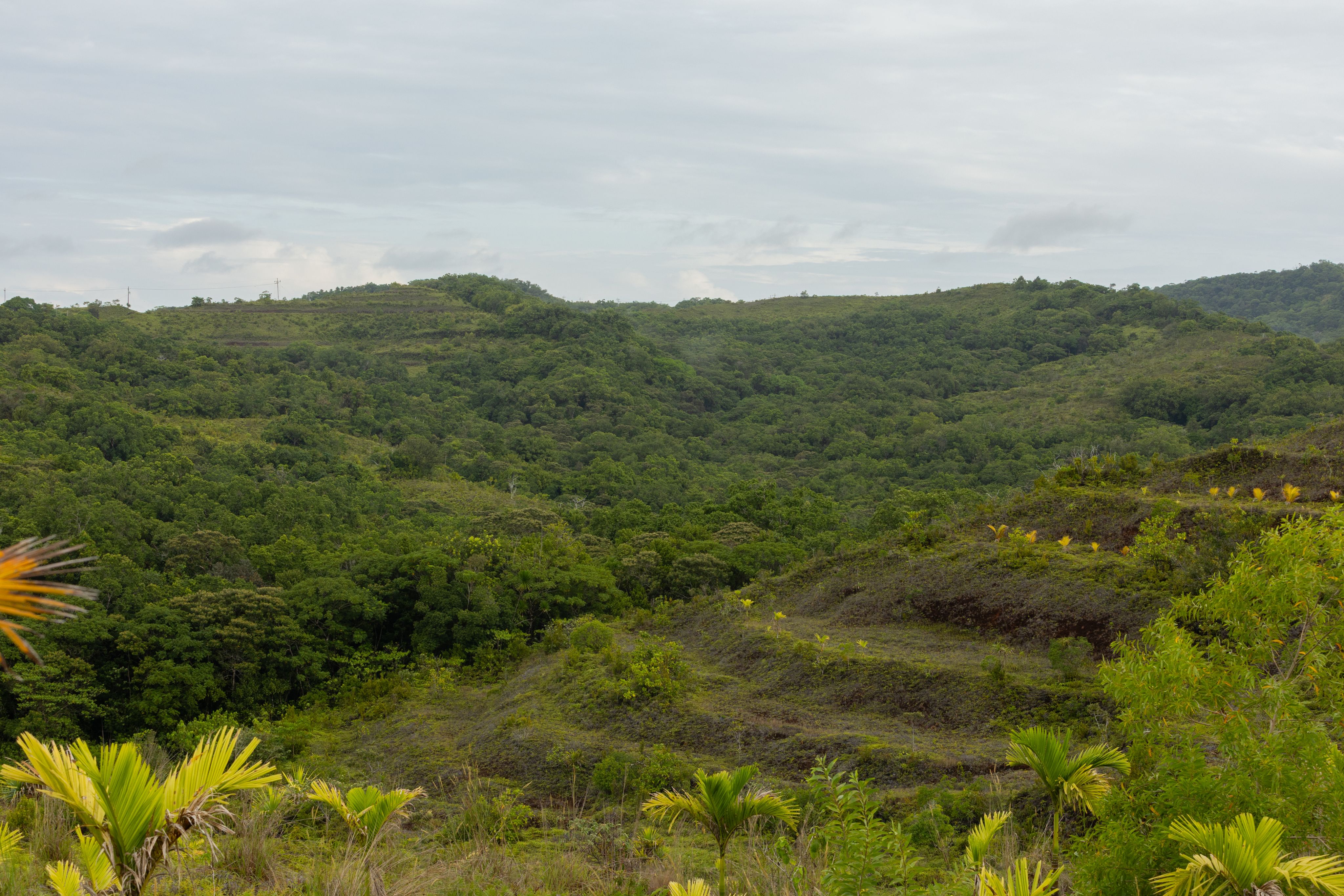
Sediment runoff from an old mining operation in Ollei, Ngarchelong State, poses a threat to Palau’s coastal ecosystems, which is why the land is being rehabilitated. (Kiara Worth/IISD/Palau Office of Climate Change)
Sediment runoff from an old mining operation in Ollei, Ngarchelong State, poses a threat to Palau’s coastal ecosystems, which is why the land is being rehabilitated. (Kiara Worth/IISD/Palau Office of Climate Change)
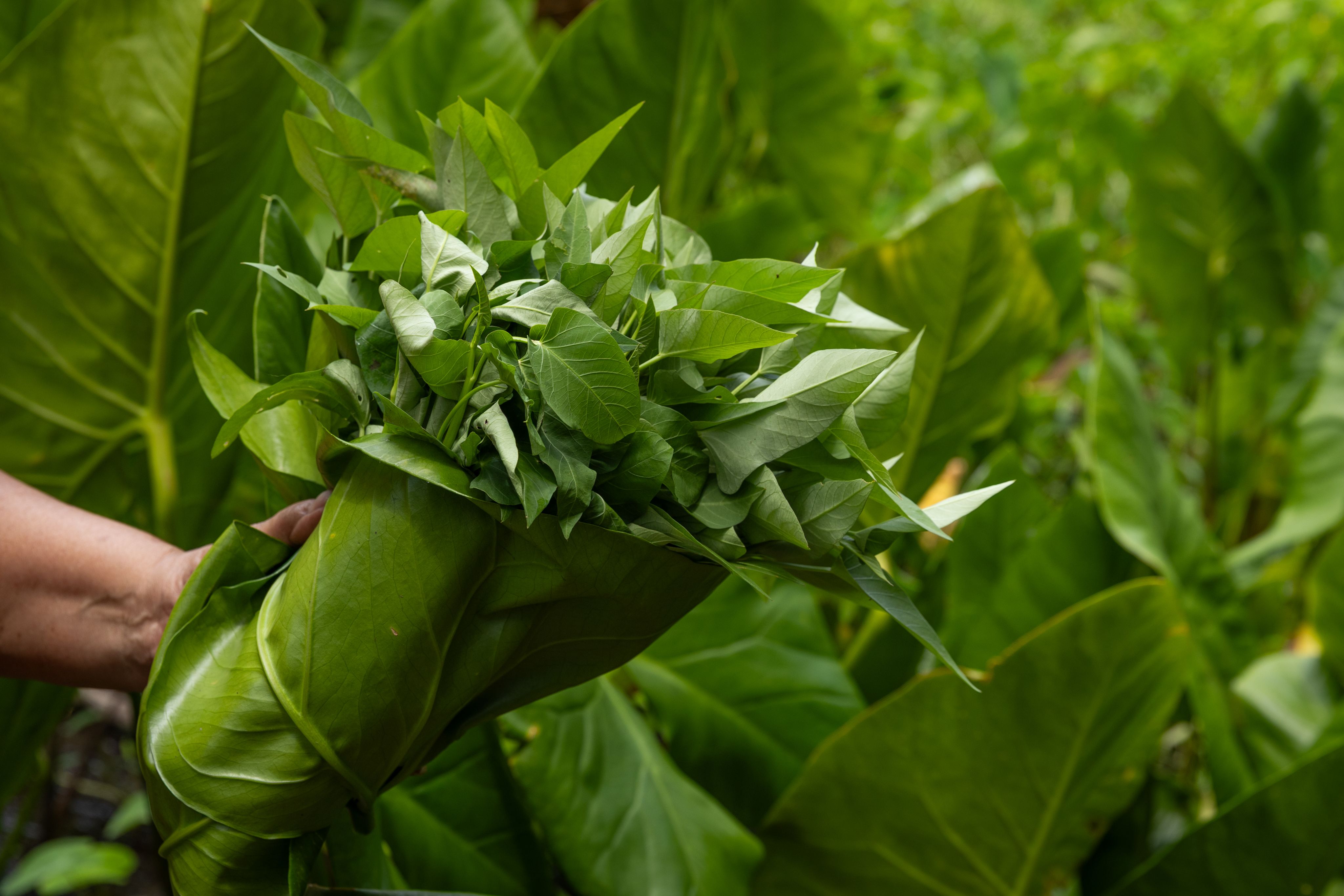
Kiara Worth/IISD/Palau Office of Climate Change
Kiara Worth/IISD/Palau Office of Climate Change
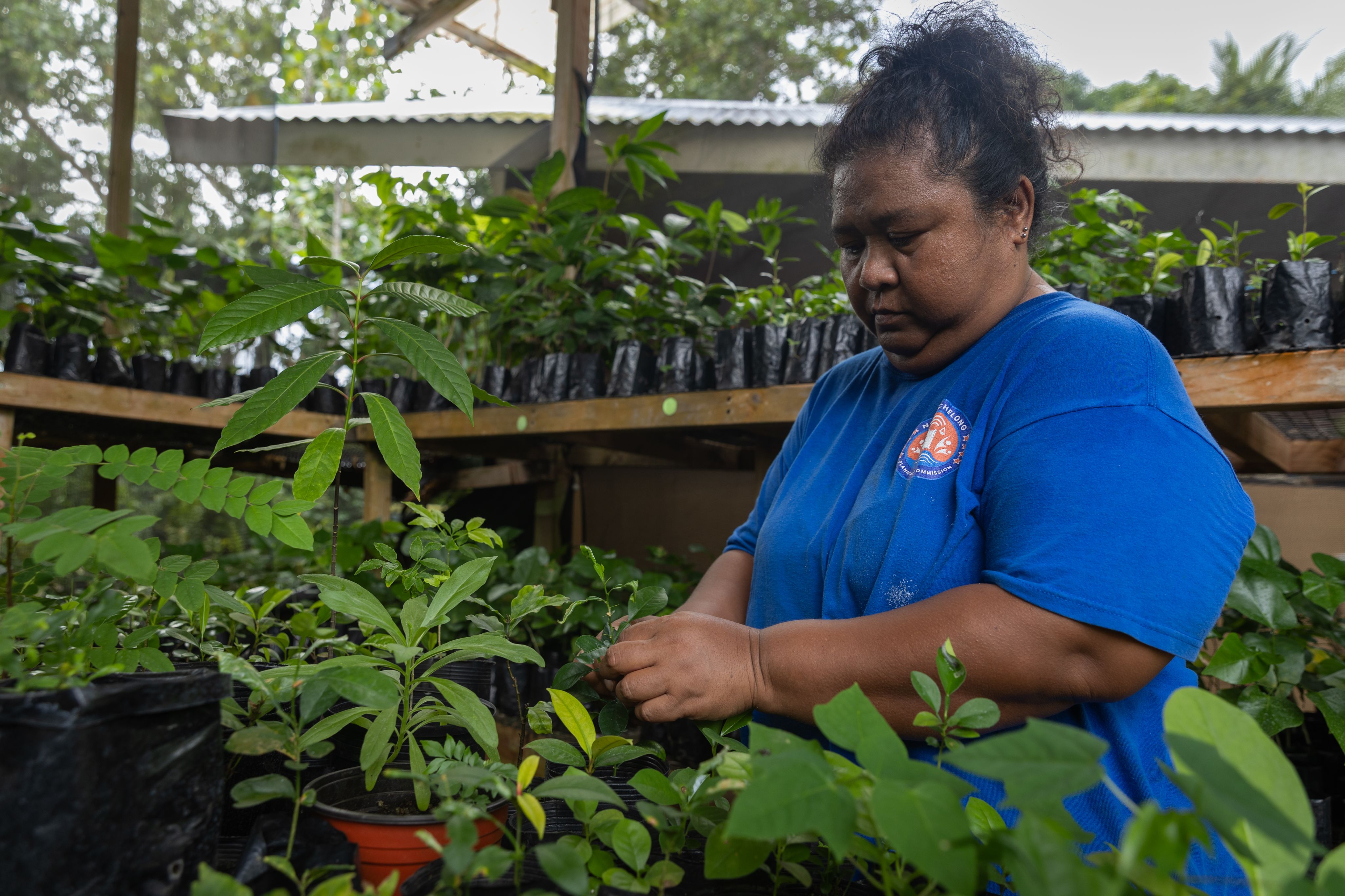
Patricia Kloulechad at Ebiil Society gently inspects seedlings, checking leaves for signs of disease, monitoring growth, and ensuring each plant has the best chance of survival. (Kiara Worth/IISD/Palau Office of Climate Change)
Patricia Kloulechad at Ebiil Society gently inspects seedlings, checking leaves for signs of disease, monitoring growth, and ensuring each plant has the best chance of survival. (Kiara Worth/IISD/Palau Office of Climate Change)

Community-Led Infrastructure
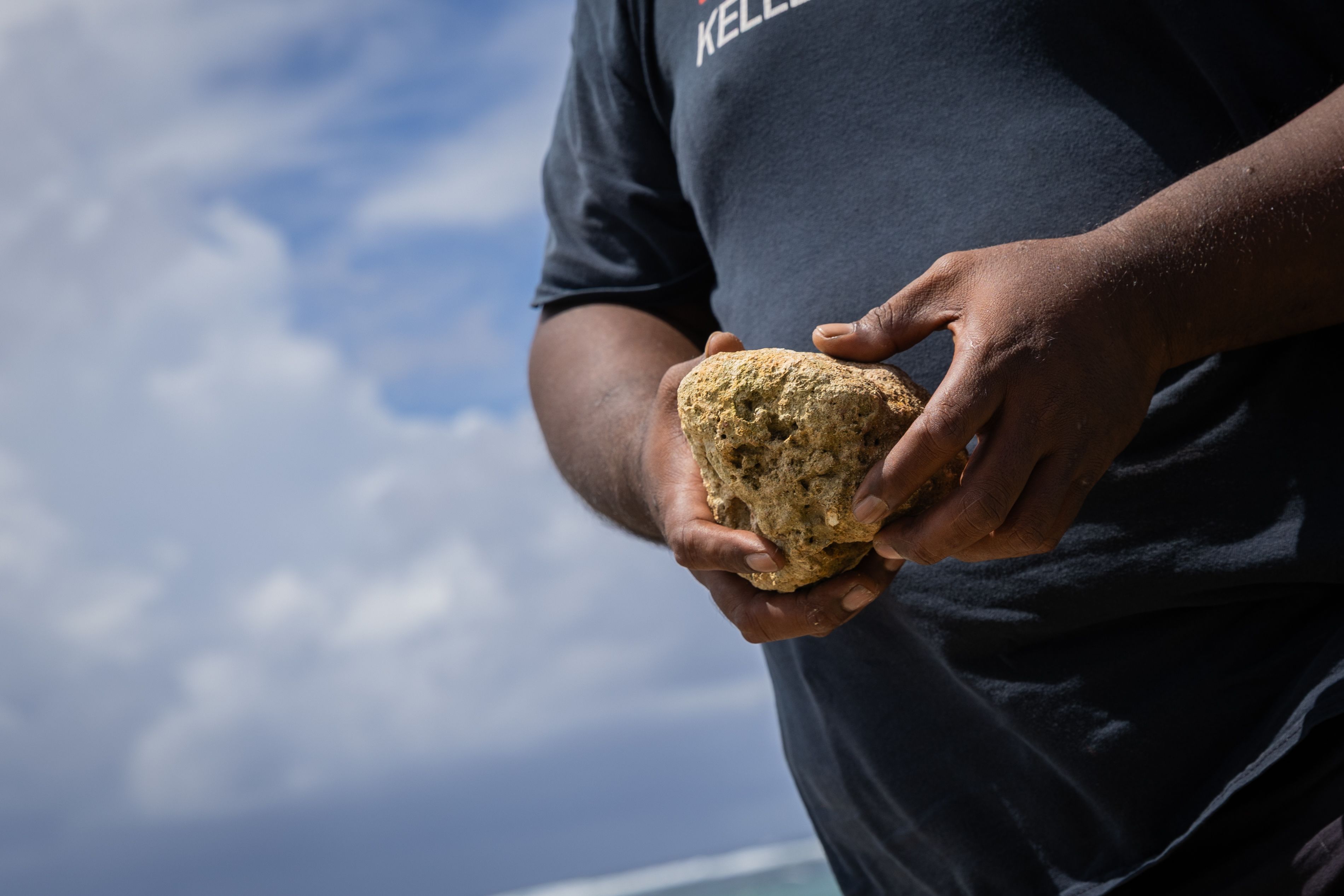
In Melekeok State, coastal communities are responding to sea wall erosion through a model of collective, community-organized repair. Demei Elechuus, Sanitation Officer and Community Engagement Coordinator for Melekeok, describes a process in which the traditional authority of the chief coordinates community members to gather stone and rebuild eroded sections of protective infrastructure. This process—spanning generations and drawing on a shared sense of environmental stewardship—is not merely a practical response to erosion. It reflects a broader ethic of collective responsibility for the coastal environment that represents, in Demei's words, the understanding that community members are "stewards of paradise."
This model has important implications for climate adaptation planning more broadly: community-led infrastructure maintenance, grounded in existing social structures and cultural values, can be more responsive, more sustainable, and more trusted than externally managed alternatives.
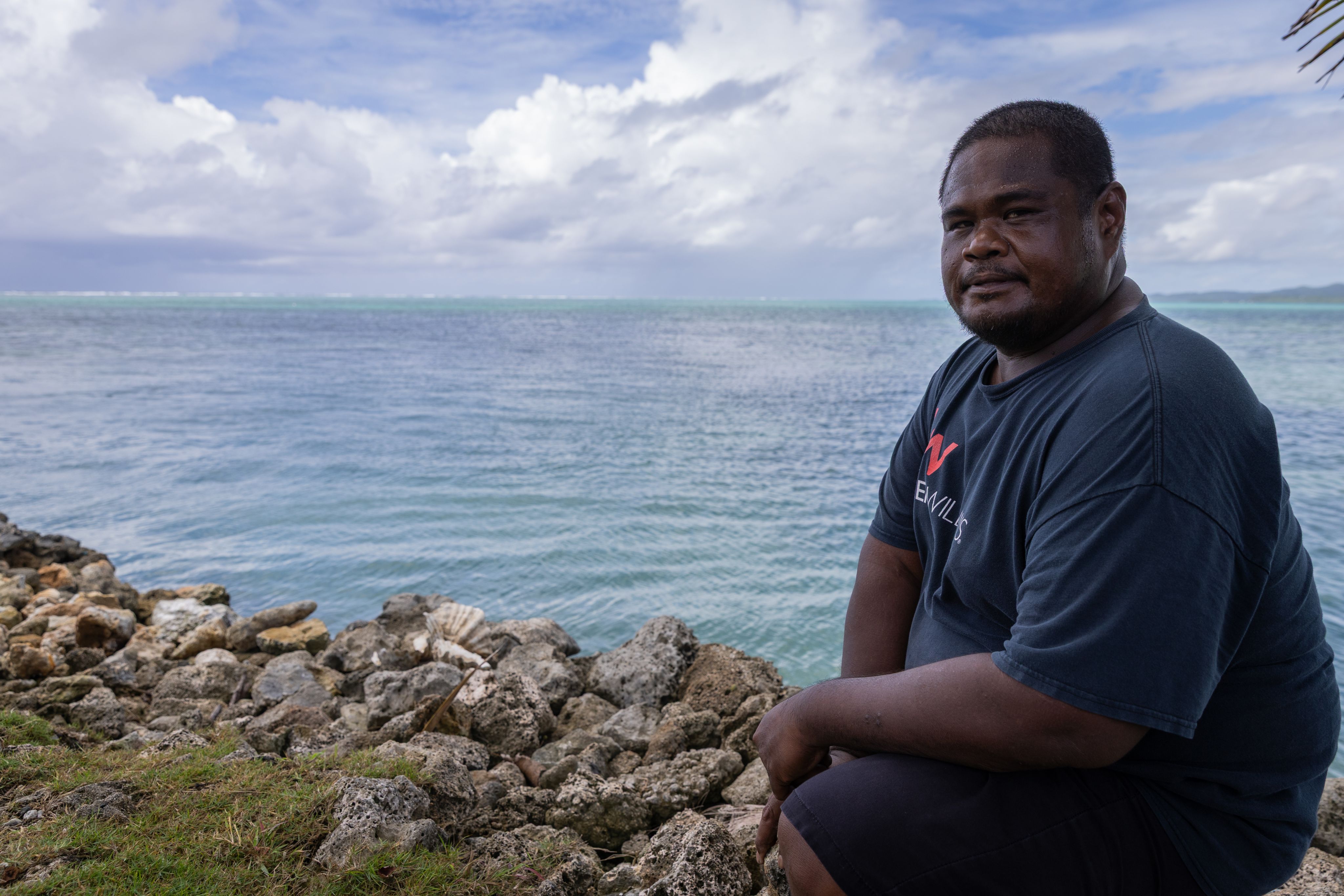
Demei Elechuus, Sanitation Officer, Tourist Coordinator, and Community Engagement Officer for Melekeok State, at one of the newly reinforced sea walls. (Kiara Worth/IISD/Palau Office of Climate Change)
Demei Elechuus, Sanitation Officer, Tourist Coordinator, and Community Engagement Officer for Melekeok State, at one of the newly reinforced sea walls. (Kiara Worth/IISD/Palau Office of Climate Change)
Youth Engagement and Capacity Building
Palau's adaptation strategy explicitly recognizes that long-term resilience depends on the engagement of younger generations. Youth education and environmental participation programs serve both practical and cultural functions: they build the local capacity that Palau will need to sustain adaptation efforts over time, and they reinforce the intergenerational transmission of environmental knowledge and stewardship values that have always underpinned how Palauans relate to their land and ocean.
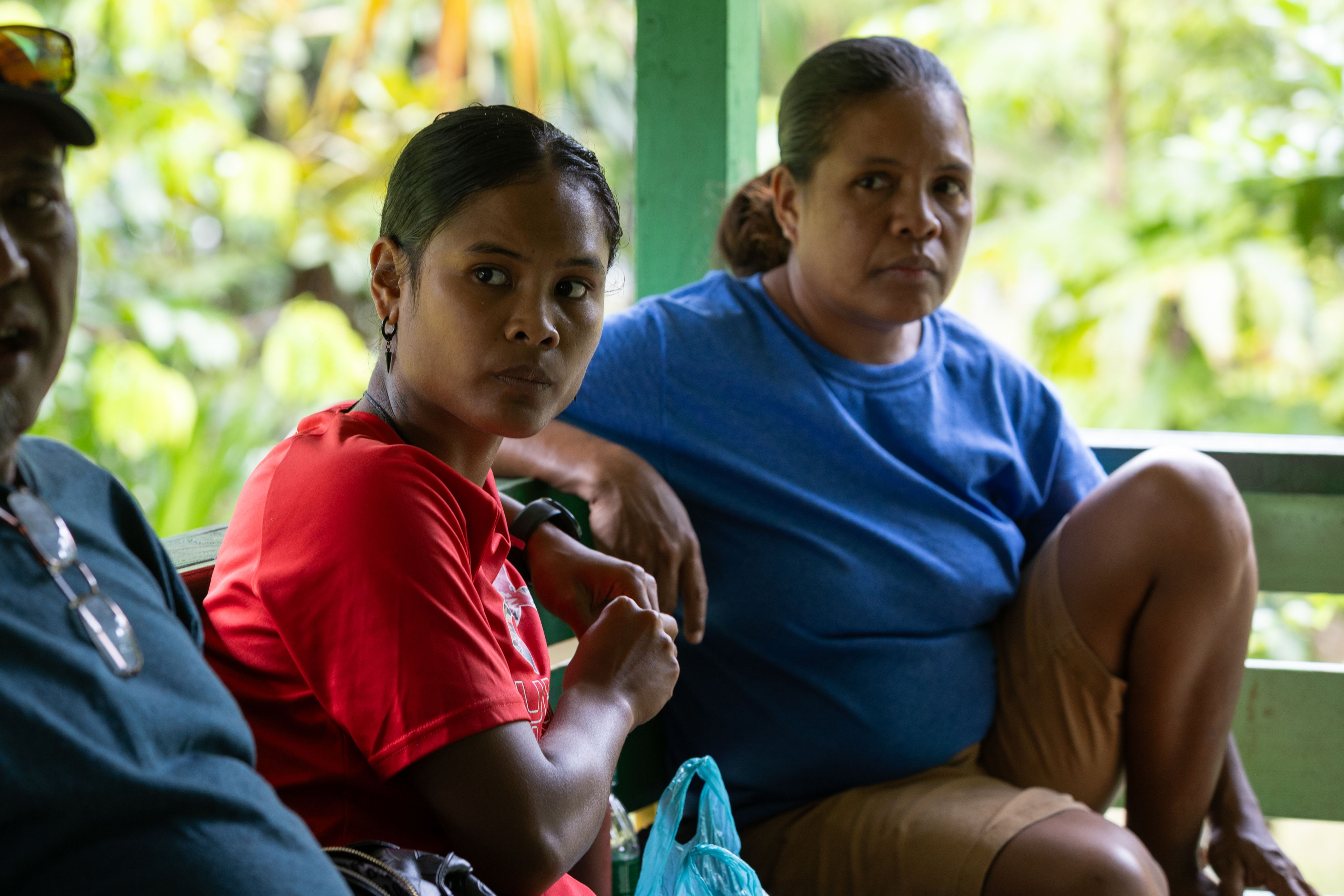
Local youth engage in a training to serve as tour guides at a bird sanctuary within the Ngaremeduu Bay Conservation Area. (Kiara Worth/IISD/Palau Office of Climate Change)
Local youth engage in a training to serve as tour guides at a bird sanctuary within the Ngaremeduu Bay Conservation Area. (Kiara Worth/IISD/Palau Office of Climate Change)
Kiara Worth/IISD/Palau Office of Climate Change
Kiara Worth/IISD/Palau Office of Climate Change
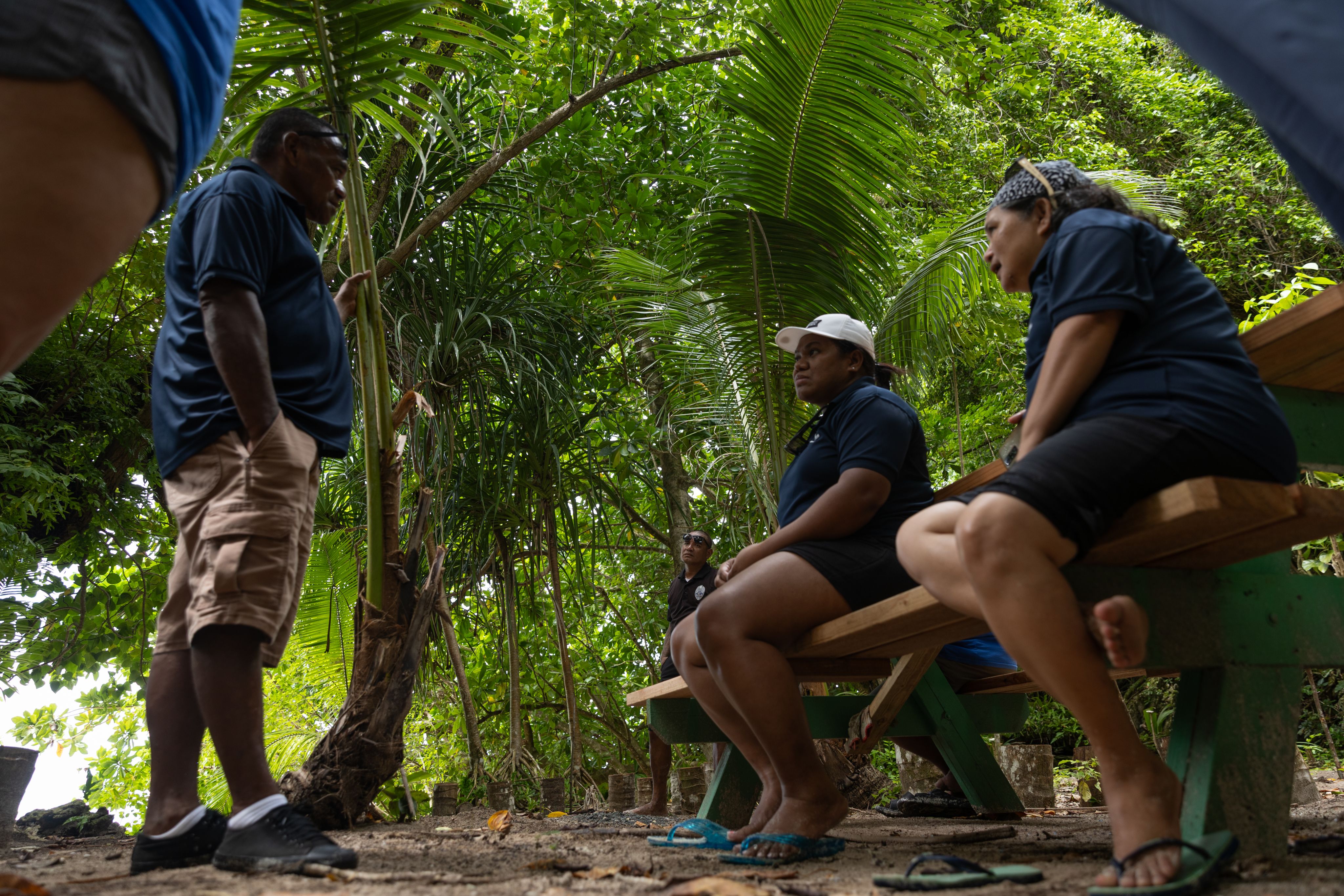
Koror State Rangers regularly gather with the Department of State and Cultural Affairs, and the Resilient Reefs Initiative to coordinate adaptation efforts. (Kiara Worth/IISD/Palau Office of Climate Change)
Koror State Rangers regularly gather with the Department of State and Cultural Affairs, and the Resilient Reefs Initiative to coordinate adaptation efforts. (Kiara Worth/IISD/Palau Office of Climate Change)
Kiara Worth/IISD/Palau Office of Climate Change
Kiara Worth/IISD/Palau Office of Climate Change
Building Resilience Together: A model worth noting
Palau's approach to climate change adaptation offers lessons that extend well beyond its own borders. In a context defined by limited resources, high exposure to climate change, and deep cultural connection to the natural environment, Palau has developed an adaptation model for its NAP process that is at once technically rigorous and community-grounded—one in which governance, science, traditional knowledge, and collective action are understood as mutually reinforcing rather than competing.
The effectiveness of this model depends on relationships—between the OCC and state representatives, between technical experts and community knowledge holders, and between government and the people it serves. Building these relationships takes consistent, sustained effort. It requires showing up in the field, not just in planning meetings. It means treating community knowledge not as background context but as substantive input. And it involves the kind of institutional humility that recognizes the limits of any single source of expertise.
As climate change pressures intensify across the Pacific and beyond, the question facing vulnerable nations is not only how to adapt, but how to build adaptation systems that are equitable, effective, and capable of enduring. In Palau, the answers being developed—though still proposed as hypotheses, their development ongoing—offer a compelling case that resilience is built not by any single actor or intervention, but through the sustained, coordinated effort of communities, governments, and individuals who share a deep investment in the future of the places they call home.
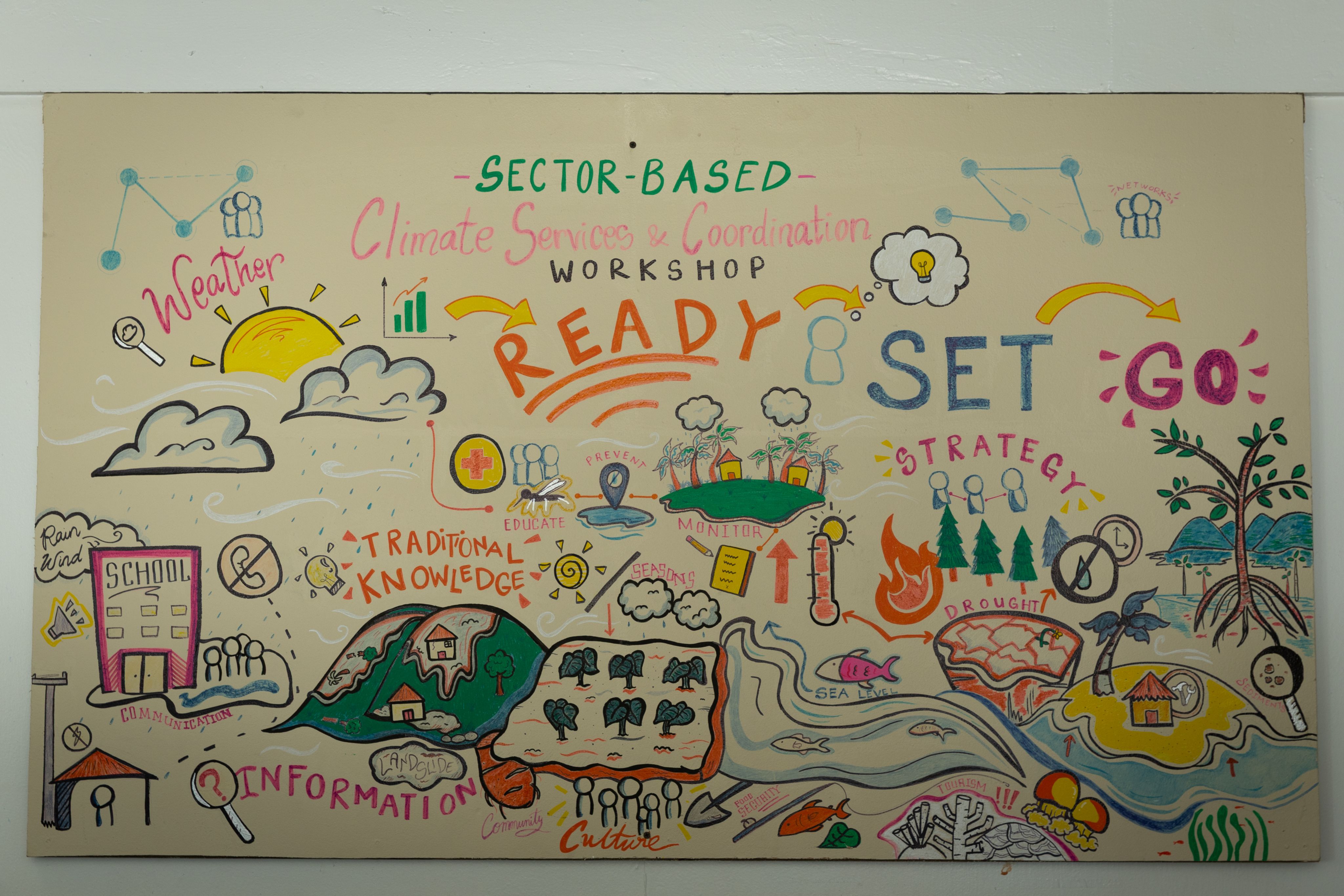
Kiara Worth/IISD/Palau Office of Climate Change
Kiara Worth/IISD/Palau Office of Climate Change
Credits

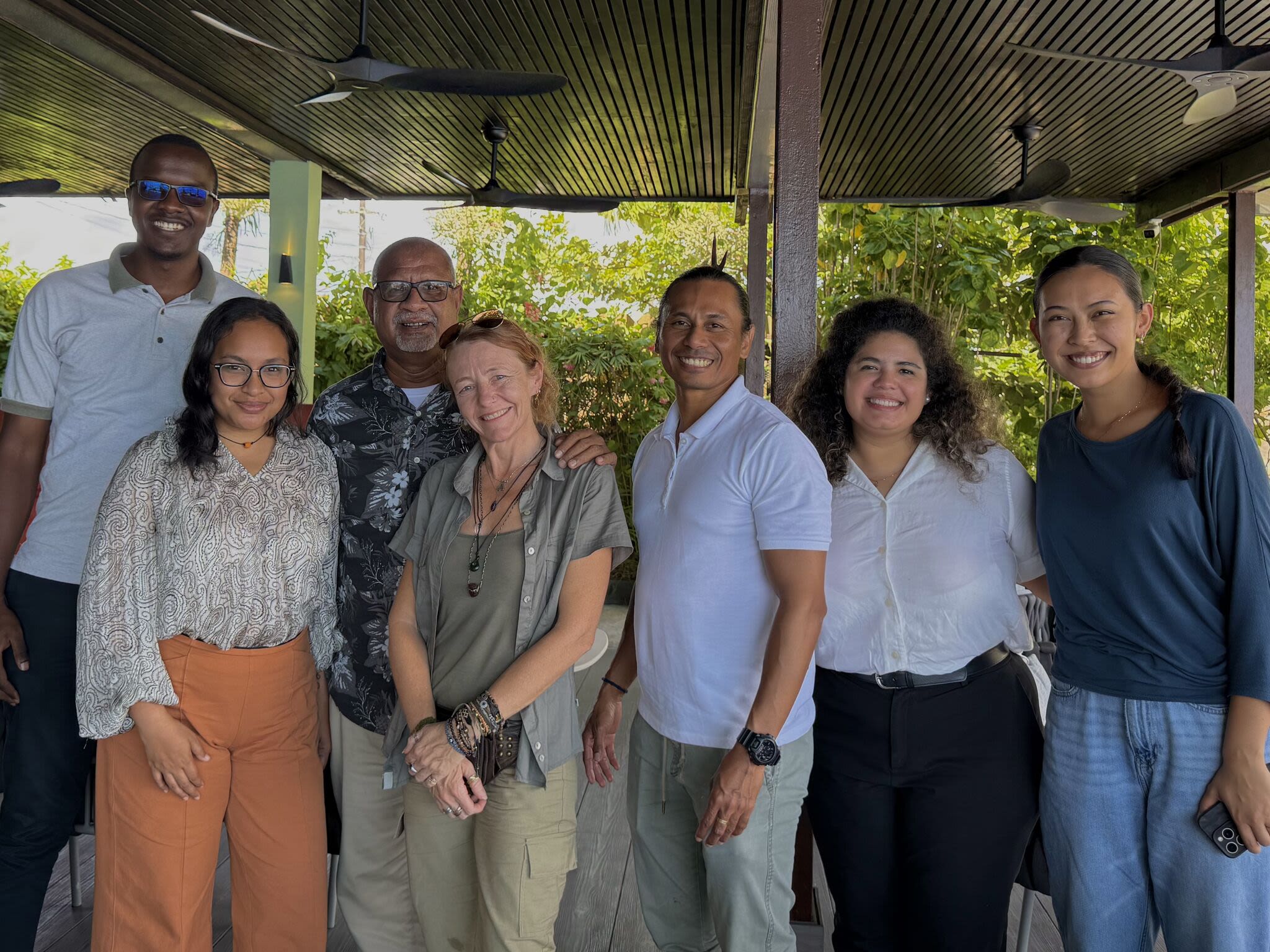
(left to right) Steve Moruri, Toni Soalablai, Joe Aitaro, Kiara Worth, Xavier E Matsutaro, Cecilia Quaglino, and Mikayla Etpison.
(left to right) Steve Moruri, Toni Soalablai, Joe Aitaro, Kiara Worth, Xavier E Matsutaro, Cecilia Quaglino, and Mikayla Etpison.
Photos and stories by: Kiara Worth and Palau Office of Climate Change (OCC).
Photos: Kiara Worth.
Special thanks to:
• President Surangel Whipps Jr.
• Sherry Koshiba, a community ranger and representative of Aimeliik State Government
• Toni Soalablai, Communications, Information Management and Outreach Officer
• Demei Elechuus, Sanitation Officer, Tourist Coordinator, and Community Engagement Officer for Melekeok State
• Jordan Malsol, Bureau of Fisheries, Ministry of Agriculture, Fisheries and the Environment; Belau Offshore Fishers Inc.
• Okada Techitong, Chairman of Belau Offshore Fishers Inc.
• Lauren Piot, Aquarium Researcher at the Palau International Coral Reef Center
• Lucy Dickie, Communications and Outreach Officer, Palau International Coral Reef Center
• Carol Emaurois, Ngaraungiang Women’s Society
• Joyce Beouch, Program Director at the Ebiil Society
• Patricia Kloulechad, Ebiil Society
• McMichael Mutok, Registrar at the Bureau of Cultural and Historical Preservation
• Shaquill Renguul, Ngeremlengui State Representative
• David Idip, Office Manager of the Palau Automated Land and Resource Information System
• Andrea Uchel, Chief Resilience Officer, Resilient Reefs Initiative
• Phedias Brel, Historian at the Department of State and Cultural Affairs
• McCarley Udoud Masaharu, Koror State Ranger

© March 2026, International Institute for Sustainable Development
Published by the International Institute for Sustainable Development.
This publication is licensed under a Creative Commons Attribution-NonCommercial-ShareAlike 4.0 International License.



 Built with Shorthand