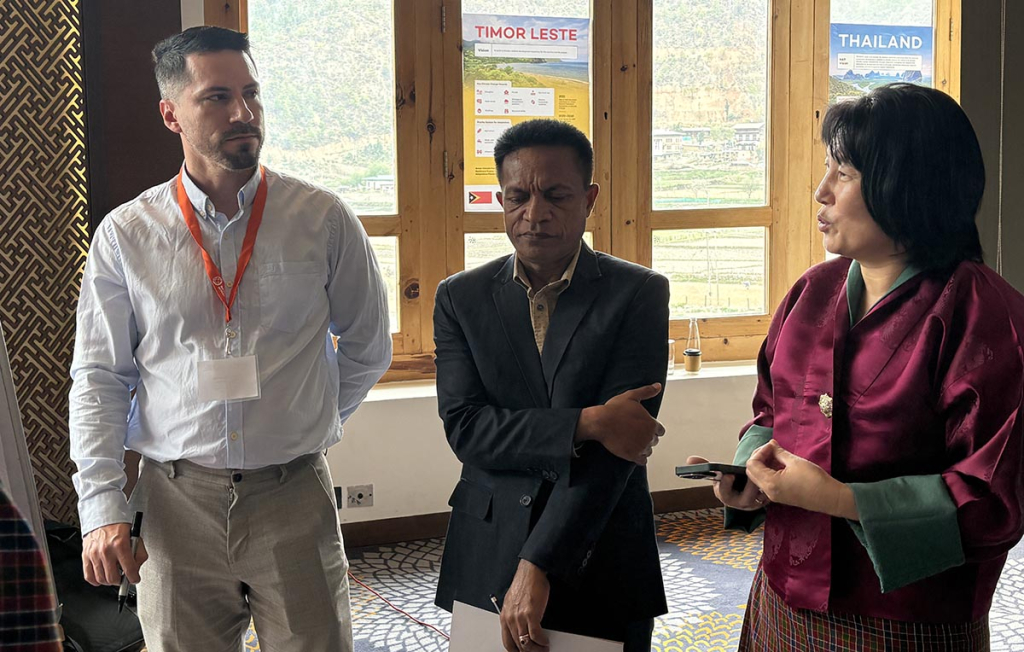
- As 2026 marks a critical year for climate reporting under the Paris Agreement, the regional peer learning event in Bhutan focuses on enhancing monitoring, evaluation, and learning (MEL) systems for climate change adaptation to better inform global frameworks and communicate climate action.
PARO, BHUTAN – From April 13 to 15, the Royal Government of Bhutan is bringing together government representatives in Paro for a discussion to strengthen the approaches used to collect data, assess and report on the progress of national responses to climate change.
Participants from eight Asia–Pacific countries—Bhutan, Cambodia, Malaysia, the Philippines, Thailand, Timor Leste, Tonga, and Vietnam—are participating in a regional peer learning event focused on exploring the links between monitoring, evaluation, and learning (MEL) systems; climate change adaptation; and international climate reporting under the Paris Agreement.
The 3-day event, supported by the National Adaptation Plan (NAP) Global Network, is also fostering collaborative peer-to-peer dialogues to strengthen the continuous collection and analysis of data to inform adaptation plans, policies, practices, and on-the-ground actions.
“The event here in Bhutan focuses on how countries are building and using practical MEL systems for NAP processes that function effectively within real institutional contexts and contribute to both national decision making and international reporting,” said Sonam Tashi, director of Bhutan’s Department of Environment & Climate Change.
In 2025, developing countries made important advances in adaptation planning. Developing, strengthening, and implementing MEL systems for NAPs is a critical way for countries to reduce vulnerabilities and build climate resilience. It’s an opportunity to assess progress, learn, and figure out what is needed to transition from planning to implementation.
Despite some progress made in the process to formulate and implement NAPs, many countries still need support to enhance MEL systems for adaptation to improve their understanding of whether they are becoming more climate resilient, who benefits from adaptation investments, and how effective their adaptation actions are. Karma Tshering, secretary of the Ministry of Energy and Natural Resources of Bhutan, underscores the critical importance of MEL systems in tracking climate action: “The success of adaptation depends not only on planning and implementation but also on systematically tracking progress, measuring results, and learning from experience.”
Tracking progress on NAPs is also relevant for global progress reporting. As the 2026 deadline approaches for the second Biennial Transparency Reports (BTRs)—a key process for reporting and transparency under the Paris Agreement—countries have an opportunity to report on their progress in addressing the impacts of climate change and share information on adaptation efforts.
“A sound MEL system for national adaptation plan processes allows countries to understand not just what is happening, but how and for whom adaptation is working,” said NAP Global Network’s lead on MEL for adaptation to climate change, Dr. Emilie Beauchamp. “MEL systems also support the tracking of collective progress toward the global goal on adaptation, a collective commitment under the Paris Agreement to enhance adaptive capacity, strengthen resilience, and reduce vulnerability to climate change.”
The timing is significant. Following the adoption of a new global framework for the global goal on adaptation at the 28th UN Conference on Climate Change (COP 28), countries agreed on a set of 59 indicators at COP 30 in Belém. The challenge now is to connect those global commitments to the everyday work of national planning, using the same tracking systems that countries are here to strengthen.
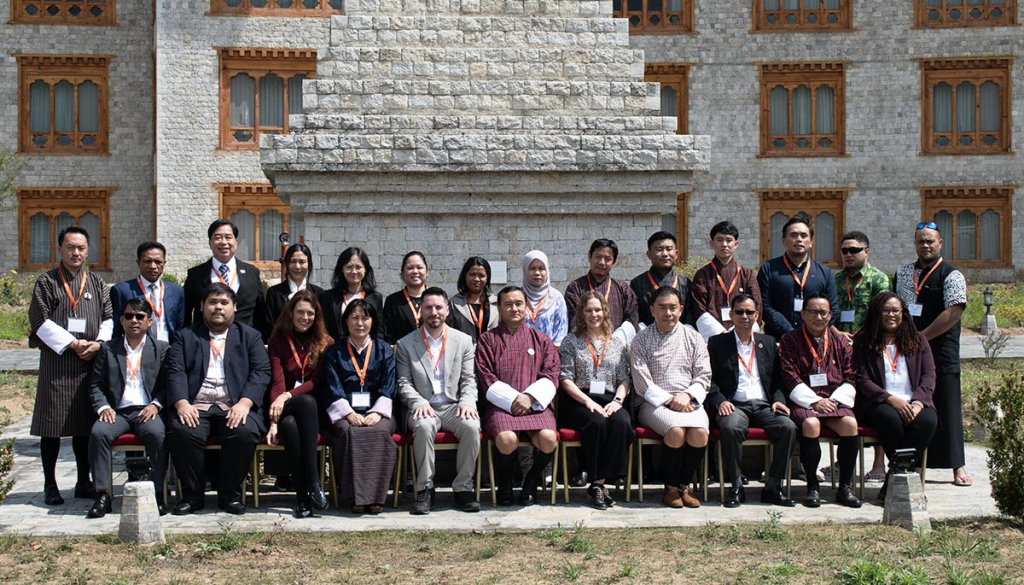
The NAP Global Network helps accelerate climate change adaptation efforts worldwide by supporting partner countries in advancing their NAP processes. Through these processes, countries also prioritize adaptation actions, mobilize finance, and address capacity constraints.
Peer learning is a key pillar of the Network’s support, and it has over 10 years of experience convening dynamic South–South peer learning events for conversations about what is working and what is not in NAP processes. This peer learning forum is funded by the German Federal Ministry for Economic Cooperation and Development (BMZ).
CONTACTS
Karma Cheki
Information and Media Officer
Ministry of Energy and Natural Resources
Adrián Estanol
Communication Officer, NAP Global Network
Juliet Perry
Communication Manager, IISD
NOTES TO EDITORS