Peruvian Ministry of Environment Launches Participatory Process for the Development of the National Adaptation Plan on Climate Change

Press release | Peruvian Ministry of Environment

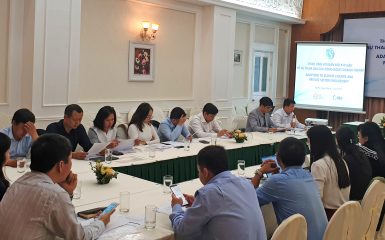
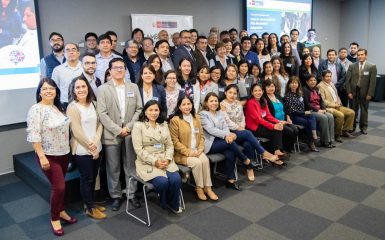
On Thursday, November 28th, the Ministry of Environment of Peru held its first meeting towards the participatory process for the development of its climate change National Adaptation Plan (NAP). This guidance document will be Peru’s most important tool for implementing all the actions needed to reduce risks and vulnerability against climate change’s effects while simultaneously […]

Participatory Development of Vulnerability Assessments in Benin, Burkina Faso, and Senegal for Better Adaptation Planning

By Sönke Marahrens, GIZ, Sarah D’haen & Melinda Noblet, Climate Analytics

Vulnerability assessments are an important part of a country’s National Adaptation Planning process, providing evidence for adaptation practitioners to make informed decisions about where adaptation action is needed most. Supported by Climate Analytics through the project “Science-based support for NAP processes in francophone Least Developed Countries of sub-Saharan Africa” (PAS-PNA)[1], the governments of Benin, Burkina […]

NAP Global Network at COP 25

Madrid, Spain (under Chilean presidency), Dec. 2–13, 2019

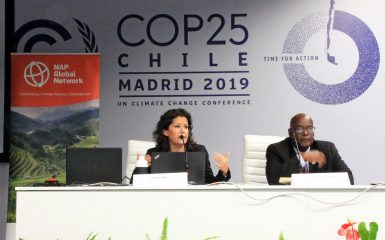
Governments from around the world are meeting in Madrid, Spain from December 2 to 13 at the 2019 United Nations Climate Change Conference (COP 25) to discuss climate policy. Experts from the NAP Global Network will take part in discussions, share research and convene events at the conference

Nigeria Validates Its NAP Framework as Government Calls for Decisive Adaptation Action

The Nigerian National Adaptation Plan (NAP) framework was validated by stakeholders from both the public and private sectors during a workshop held in Abuja on November 5. The framework aims to guide the government in developing and implementing policies, plans and legislation that will assist Nigeria to address its medium- and long-term adaptation needs. The […]

Striving to Adapt to Climate Change: Lessons from Albania

By Laureta Dibra, Lindita Tafaj and Alexandre Borde

Albania is suffering from the effects of extreme weather events such as flooding, droughts and heat waves. During the last 10 years, floods have devastated regions and cities such as Shkodër, Tiranë, Vlorë and Fier, and posed a significant threat to Albania’s economy, ecosystems and people’s health. Recurring floods caused USD 218 million in damage […]

Albania Strategizes Funding Adaptation in Cities

The Government of Albania is working on a project to mobilize funds to enable the implementation of adaptation policies in six of the country’s most vulnerable cities to climate change. On October 3 in Tirana, stakeholders from different levels of government met to learn more about the project, which aims to raise USD 50 million, […]

Kiribati unveils updated plan for managing climate change and disaster risks during Climate Week

NEW YORK, September 27, 2019 – The Government of the Republic of Kiribati launched its revised Joint Implementation Plan for Climate Change and Disaster Risk Management (KJIP), setting out its ambitions for building Kiribati’s resilience to climate change impacts. The KJIP was launched at a side-event organized by the Republic of Kiribati and the Republic […]

Botswana Commits to 16 Recommendations from Government Stakeholders for its NAP Framework

Botswana’s National Adaptation Plan (NAP) Framework Inception Report will incorporate 16 recommendations collected from the participants of the workshop hosted by the Botswana Ministry of Environment, Natural Resources, Conservation and Tourism, through the Department of Meteorological Services. Held in Gaborone on September 18, the event aimed to raise awareness of the country’s NAP process. The […]

Malawi Gears Up to Adapt to Climate Change

By Donald Reuben Kamdonyo, Ph.D., Climate Change Specialist, Kamdonyo & Associates, Lilongwe, Malawi

Globally, climate change has been recognized as one of the biggest challenges that humanity is facing today. It has serious worldwide implications on economic development, food security and poverty eradication for developing countries, especially for least-developed countries like Malawi. All of Malawi’s socioeconomic sectors have been, and will continue to be, affected by climate change […]