Analysis and commentary on the Network’s experiences coordinating climate-resilient development.

Peru Launches its National Adaptation Plan (NAP)
June 10, 2021
Peru’s Ministry of Environment published the country’s NAP in an effort to strengthen its resilience to the impacts of climate change.

How Côte d’Ivoire is Accelerating Gender Mainstreaming in Climate Change Action: Working with national gender advisors
An interview by Julie Dekens with Jean Douglas Anaman, National Adaptation Plan (NAP) process coordinator at the Ministry of the Environment and Sustainable Development of Côte d’Ivoire
A conversation with Jean Douglas Anaman, National Adaptation Plan (NAP) process coordinator at the Ministry of the Environment and Sustainable Development of Côte d’Ivoire.
Comment la Côte d’Ivoire accélère la prise en compte du genre dans l’action climatique : Travailler avec des conseillers nationaux en genre
Un entretien de Julie Dekens avec Jean Douglas Anaman, coordinateur du processus de Plan national d’adaptation (PNA) au Ministère de l’Environnement et du Développement Durable de la Côte d’Ivoire
Nous nous sommes entretenus avec Jean Douglas Anaman, coordinateur du processus de PNA au Ministère de l’Environnement et du Développement Durable, pour mieux comprendre comment le travail de ces deux conseillers contribue à améliorer le processus de PNA de la Côte d’Ivoire.
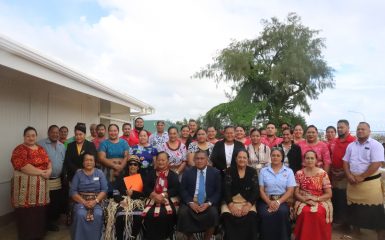
Tonga Climate Change Adaptation Media Training and Launching of Portal
On the 27th of March 2021 at Davina House, Chief Executive Officer Paula Ma’u of the Ministry of Meteorology, Energy, Information, Disaster Management, Environment, Climate Change and Communications (MEIDECC) officially opened and launched the Department of Climate Change’s portal.
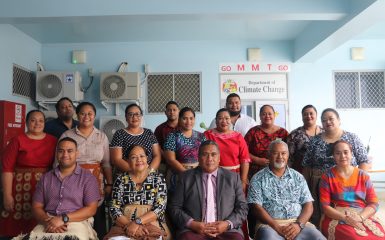
Tonga’s Journalist-Briefing Workshop with the Joint National Action Plan on Climate Change
On the 25th March 2021, the Chief Executive Officer Mr Paula Ma’u, officially opened a half-day workshop held by the Department of Climate Change under the Ministry of MEIDECC for media professionals and journalist from different Media Organization in Tonga.
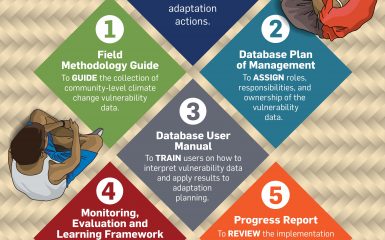
Five New Tools for Coordinating Climate Change Adaptation in Kiribati
Julie Dekens and David Hoffmann, the International Institute for Sustainable Development.
The Government of Kiribati recognizes the risks that climate change poses to the livelihoods of its people. Accordingly, it is putting in place measures to ensure the activities they depend on can withstand more intense and frequent climate hazards. Our team at the NAP Global Network recently helped Kiribati publish several important documents that work […]

Jamaica’s Road to Climate Resilience: Paving the way forward with lessons learned
Daniel Morchain, IISD, and Katherine Blackman and Le-Anne Roper, Climate Change Branch, Ministry of Economic Growth and Job Creation, Government of Jamaica
For decades, Jamaicans have recognized the need to adapt to the impacts of climate change—and acted on it. With several dozen adaptation projects completed or in their implementation stage and an institutional structure set up to ensure coherence and collaboration between government and non-government actors, Jamaica can boast of its track record.

Engaging the Private Sector in Vietnam’s National Adaptation Plan (NAP) Process
By Huy Nguyen, Climate Change Specialist, Vietnam
Conducting interviews with private enterprises to identify the barriers in private sector participation in the NAP process.

Botswana’s Pragmatic Approach to a Climate-Proof Economy
Sennye Masike PhD, Environmental Economist, CLIMsystems Ltd
Botswana’s National Adaptation Plan (NAP) framework will contribute to the country’s climate change adaptation efforts by guiding the development of the NAP process and give direction to sectoral initiatives.
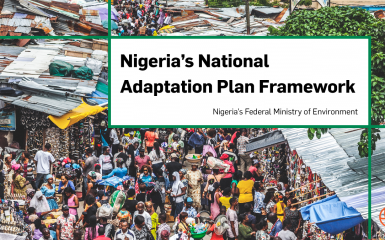
Making Adaptation More Effective in Nigeria: Nigeria’s NAP process
Yerima Tarfa (PhD), Director, Climate Change Department, Federal Ministry of Environment, Abuja and Francis Adesina (PhD), Obafemi Awolowo University, Ile-Ife.
The process of developing Nigeria’s National Adaptation Plan Framework has unveiled the challenges in Nigeria’s adaptation programming, particularly showing which issues need attention for a greater impact in the country.
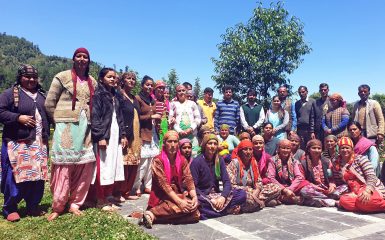
Mainstreaming as a Means for Localizing and Implementing Adaptation Actions
By Kirtiman Awasthi, Somya Bhatt and Ashish Chaturvedi, GIZ India
This process of mainstreaming adaptation has the potential to improve the resilience of development outcomes, enhance community resilience to climate change impact, and safeguard investments.
Peru Launches a Catalogue with 92 Adaptation Measures to Be Carried Out as Part of its NAP Process
Updated: January 4, 2021 An addition was made to the report, increasing the total from 91 to 92 adaptation measures. The Peruvian Ministry of Environment launched a catalogue with 92 adaptation measures to be implemented as part of the country’s National Adaptation Plan (NAP) process. The catalogue offers a structure for understanding Peru’s ambitions when […]